Showing posts with label wellness. Show all posts

Sunday, November 24, 2019

Arts play major role in health and well-being, WHO says in new report

reposted from
https://www.euronews.com/2019/11/11/arts-play-major-role-in-health-and-well-being-who-says-in-new-report


Arts play major role in health and well-being, WHO says in new report
 COMMENTS
Arts play major role in health and well-being, WHO says in new report
Copyright
ionasnicolae/ Pixabay
TEXT SIZEAaAa
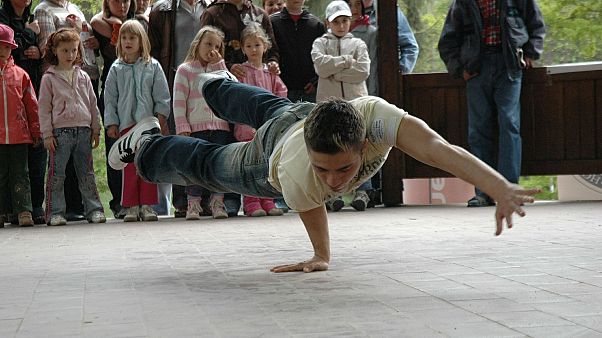
Can we dance our way to better health and well-being? The answer is yes, according to a new study released this Monday by the UN's health body.
“Engaging with the arts can be beneficial for both mental and physical health,” the World Health Organisation (WHO) concluded after conducting “the most comprehensive review of evidence” on the subject to date.
The organisation's Regional office for Europe analysed over 900 global publications and 3,000 studies, with a view to informing public policies.
According to health experts, listening to music helps control blood glucose level, playing an instrument improves the immune system and stress management, while dancing provides benefits throughout the body and mind. Meanwhile, painting or sculpture can help tackle depression.
“The examples cited in this groundbreaking WHO report show ways in which the arts can tackle ‘wicked’ or complex health challenges such as diabetes, obesity and mental ill-health,” said Piroska Östlin, WHO Regional Director for Europe.
The publication will be launched this Monday 08:00 CET during an event in Helsinki, Finland. You can watch the launch event by clicking on the player below.
The report highlights how the arts play a crucial role in well-being from birth to end of life.
“Young children whose parents read to them before bed have longer night-time sleep and improved concentration at school,” WHO said.
Research also shows the benefits of theatre for adolescents or music for older people with dementia.
Arts can furthermore be a valuable resource in emergency situations and organisations such as Clowns Without Borders have developed expertise in this area.
The report says art therapy does not only produce good results but can also be more cost-efficient than standard biomedical treatments.
Arts intervention can furthermore be tailored to have relevance for people from different cultural backgrounds, WHO notes, thus offering “a route to engage minority or hard-to-reach groups.“

Case studies across Europe

The report provides various examples of organisations implementing arts-based approaches to health.
One of them is Arts on Prescription in the UK. Under the scheme, individuals who consult their GP with non-medical problems - such as social isolation - can be referred to a link worker.
“Link workers connect patients with community activities, including participatory arts activities. Local evaluations in different regions have shown benefits for mental health, chronic pain, management of complex and long-term conditions, social support and well-being,” the report found.
In Russia, Doctor Clown has been working in the past decade to improve the experiences of children in orphanages, hospices and hospitals.
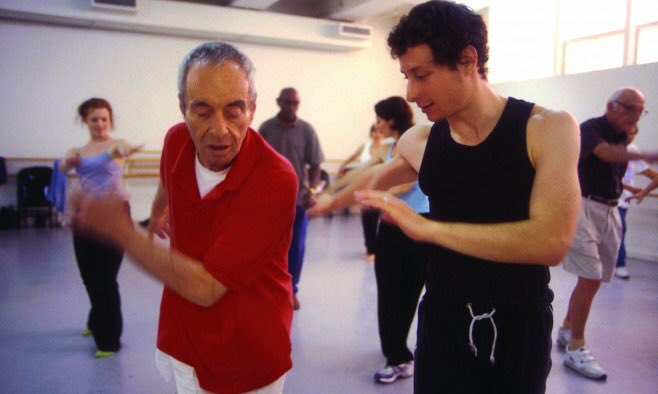
Dance for PD offers an example of a Europe-wide network that designs dance classes for people with Parkinson, focusing on their specific symptoms such as balance, cognition, motor skill, mental health and physical confidence.

Policy implications

In light of the report's findings, WHO calls on governments and authorities to implement policies giving a greater role to arts in public health.
Key policy recommendations include, among others:
• ensuring that communities have access to arts-for-health programmes
• integrating arts into the training of health-care professionals;
• introducing or strengthening referral mechanisms from health professionals to arts programmes

Friday, June 29, 2018

Leg exercise is critical to brain and nervous system health

REPOSTED FROM frontiers blog


Leg exercise is critical to brain and nervous system health

Frontiers in Neuroscience: Leg exercise is critical to neurological health
The study provides new insights into why patients with neurological diseases rapidly decline once movement is limited. Image: Shutterstock
In a new take on the exercise truism ‘use it, or lose it,’ researchers show neurological health is an interactive relationship with our muscles and our world
— By Rachael Bishop
Groundbreaking research shows that neurological health depends as much on signals sent by the body’s large, leg muscles to the brain as it does on directives from the brain to the muscles. Published in Frontiers in Neuroscience, the study fundamentally alters brain and nervous system medicine — giving doctors new clues as to why patients with motor neuron disease, multiple sclerosis, spinal muscular atrophy and other neurological diseases often rapidly decline when their movement becomes limited.
“Our study supports the notion that people who are unable to do load-bearing exercises — such as patients who are bed-ridden, or even astronauts on extended travel — not only lose muscle mass, but their body chemistry is altered at the cellular level and even their nervous system is adversely impacted,” says Dr. Raffaella Adami from the Università degli Studi di Milano, Italy.
The study involved restricting mice from using their hind legs, but not their front legs, over a period of 28 days. The mice continued to eat and groom normally and did not exhibit stress. At the end of the trial, the researchers examined an area of the brain called the sub-ventricular zone, which in many mammals has the role of maintaining nerve cell health. It is also the area where neural stem cells produce new neurons.
Limiting physical activity decreased the number of neural stem cells by 70 percent compared to a control group of mice, which were allowed to roam. Furthermore, both neurons and oligodendrocytes — specialized cells that support and insulate nerve cells — didn’t fully mature when exercise was severely reduced.
The research shows that using the legs, particularly in weight-bearing exercise, sends signals to the brain that are vital for the production of healthy neural cells, essential for the brain and nervous system. Cutting back on exercise makes it difficult for the body to produce new nerve cells — some of the very building blocks that allow us to handle stress and adapt to challenge in our lives.
“It is no accident that we are meant to be active: to walk, run, crouch to sit, and use our leg muscles to lift things,” says Adami. “Neurological health is not a one-way street with the brain telling the muscles ‘lift,’ ‘walk,’ and so on.”


The researchers gained more insight by analyzing individual cells. They found that restricting exercise lowers the amount of oxygen in the body, which creates an anaerobic environment and alters metabolism. Reducing exercise also seems to impact two genes, one of which, CDK5Rap1, is very important for the health of mitochondria — the cellular powerhouse that releases energy the body can then use. This represents another feedback loop.
These results shed light on several important health issues, ranging from concerns about cardio-vascular impacts as a result of sedentary lifestyles to insight into devastating diseases, such as spinal muscular atrophy (SMA), multiple sclerosis, and motor neuron disease, among others.
“I have been interested in neurological diseases since 2004,” says co-author Dr. Daniele Bottai, also from the Università degli Studi di Milano. “The question I asked myself was: is the outcome of these diseases due exclusively to the lesions that form on the spinal cord in the case of spinal cord injury and genetic mutation in the case of SMA, or is the lower capacity for movement the critical factor that exacerbates the disease?”
This research demonstrates the critical role of movement and has a range of potential implications. For example, missions to send astronauts into space for months or even years should keep in mind that gravity and load-bearing exercise play an important role in maintaining human health, say the researchers.
“One could say our health is grounded on Earth in ways we are just beginning to understand,” concludes Bottai.

REPUBLISHING GUIDELINES: Open access and sharing research is part of Frontiers’ mission. Unless otherwise noted, you can republish articles posted in the Frontiers news blog — as long as you include a link back to the original research. Selling the articles is not allowed.

Wednesday, November 9, 2016

Symposium puts dance therapy in the spotlight

reposted from
http://www.theglobeandmail.com/life/health-and-fitness/fitness/canadas-first-dance-therapy-symposium-comes-to-the-national-balletschool/article32660146/
WELLNESS

Symposium puts dance therapy in the spotlight

The evidence-based practice can help treat a range of medical issues through movement
Les Grands Ballets - National Centre for Dance Therapy
Les Grands Ballets - National Centre for Dance Therapy
JOHAN JANSSON
Dancers have long known the transformative power of dance. But now more medical and wellness experts are harnessing the discipline to bring positive change to the wider population.
The ability of dance to reshape the mind as much as the body forms the focus of Canada’s first-ever dance-therapy symposium, launching Friday at Canada’s National Ballet School in Toronto.
The First National Symposium on Dance and Well-Being, as the two-day event is called, will bring together doctors, scientists, researchers and dancers – including members of the Mark Morris Dance Group – from Canada and the United States to advance the study of dance therapy, an evidence-based practice used to treat a range of medical disorders, from Parkinson’s disease to mental illness and autism.
“No matter what the pathology, dance can make people feel better. It can heal,” says Alain Dancyger, the executive director of Les Grands Ballets Canadiens in Montreal, who helped organize the symposium.
The Toronto event is a Les Grands Ballets initiative, an outgrowth of the National Centre for Dance Therapy (NCDT), which the company launched in Montreal three years ago, in partnership with four university health centres. Still in its development stage, the NCDT will become fully operational with the move in 2017 into Édifice Wilder: Espace Danse, a $25.8-million building which will also serve as the new downtown home of Les Grands Ballets and other Montreal dance organizations.
“Our focus is the impact that dance can have on an individual’s well-being and on all levels, physical, emotional, cognitive and psychological,” explains NCDT director Christian Sénéchal, also a symposium co-ordinator.
Les Grands Ballets - National Centre for Dance Therapy
Les Grands Ballets - National Centre for Dance Therapy
JOHAN JANSSON
The inaugural symposium will consist of eight workshops, six discussion forums and five research projects involving 30 experts. More than 200 dance and health professionals are expected to attend.
Among the participants is Patricia Capello, a long-time dance and movement therapist who will present a paper on her work with patients at a psychiatric facility in New York.
“[The symposium] is an opportunity for dancers, dance therapists and members of the health-care community to collaborate in demonstrating the powerful ability of the dancing and moving body to heal and support mental and physical health,” says Capello, a resident of Brooklyn.
Dr. Kara Patterson, an assistant professor at the University of Toronto, will present a paper outlining the findings of a systematic review in which dance helped patients with neurological problems regain balance, gait and functional mobility.
“I think anyone who has been involved in a program that uses dance as a form of therapy knows there is huge potential for positive benefits,” Patterson says. “But in order for dance to become an accepted form of rehabilitation we need more scientific research that carefully and systematically examines the safety and effects of dance in people with different conditions.”
Les Grands Ballets - National Centre for Dance Therapy
Les Grands Ballets - National Centre for Dance Therapy
JOHAN JANSSON
Research will likely surge with the development of the country’s first master’s degree in dance therapy, which the NCDT is creating in conjunction with McGill, Concordia and the University of Quebec at Montreal. Toronto’s York University offered the country’s first courses in dance therapy in the 1970s, about a decade after former modern dancer Marian Chace founded North America’s first dance-therapy program in New York. Dance therapy is now practised around the world.
In London, the Dance for Lifelong Wellbeing Project, an initiative of the Royal Academy of Dance, uses creative movement to improve the health and longevity of the elderly. It’s a new spin on an old story.
Therapeutic dances are as old as civilization itself. Ecstatic trance dances, African Ashanti healing dances and Egyptian belly dance are just some examples of ancient folk-dance traditions that continue to highlight altered states of consciousness along with physical healing.
For Dancyger at Les Grands Ballets, the symposium is about raising the bar on a subject relevant to all Canadians. “It is precisely because we are a ballet company that allows us to be champions of well-being through dance,” he says.
“Movement affects the mind as much as the body. It’s a holistic vision.”