Showing posts with label review. Show all posts

Sunday, November 24, 2019

Arts play major role in health and well-being, WHO says in new report

reposted from
https://www.euronews.com/2019/11/11/arts-play-major-role-in-health-and-well-being-who-says-in-new-report


Arts play major role in health and well-being, WHO says in new report
 COMMENTS
Arts play major role in health and well-being, WHO says in new report
Copyright
ionasnicolae/ Pixabay
TEXT SIZEAaAa
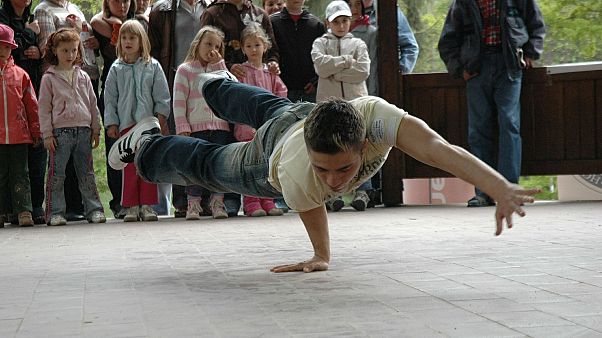
Can we dance our way to better health and well-being? The answer is yes, according to a new study released this Monday by the UN's health body.
“Engaging with the arts can be beneficial for both mental and physical health,” the World Health Organisation (WHO) concluded after conducting “the most comprehensive review of evidence” on the subject to date.
The organisation's Regional office for Europe analysed over 900 global publications and 3,000 studies, with a view to informing public policies.
According to health experts, listening to music helps control blood glucose level, playing an instrument improves the immune system and stress management, while dancing provides benefits throughout the body and mind. Meanwhile, painting or sculpture can help tackle depression.
“The examples cited in this groundbreaking WHO report show ways in which the arts can tackle ‘wicked’ or complex health challenges such as diabetes, obesity and mental ill-health,” said Piroska Östlin, WHO Regional Director for Europe.
The publication will be launched this Monday 08:00 CET during an event in Helsinki, Finland. You can watch the launch event by clicking on the player below.
The report highlights how the arts play a crucial role in well-being from birth to end of life.
“Young children whose parents read to them before bed have longer night-time sleep and improved concentration at school,” WHO said.
Research also shows the benefits of theatre for adolescents or music for older people with dementia.
Arts can furthermore be a valuable resource in emergency situations and organisations such as Clowns Without Borders have developed expertise in this area.
The report says art therapy does not only produce good results but can also be more cost-efficient than standard biomedical treatments.
Arts intervention can furthermore be tailored to have relevance for people from different cultural backgrounds, WHO notes, thus offering “a route to engage minority or hard-to-reach groups.“

Case studies across Europe

The report provides various examples of organisations implementing arts-based approaches to health.
One of them is Arts on Prescription in the UK. Under the scheme, individuals who consult their GP with non-medical problems - such as social isolation - can be referred to a link worker.
“Link workers connect patients with community activities, including participatory arts activities. Local evaluations in different regions have shown benefits for mental health, chronic pain, management of complex and long-term conditions, social support and well-being,” the report found.
In Russia, Doctor Clown has been working in the past decade to improve the experiences of children in orphanages, hospices and hospitals.
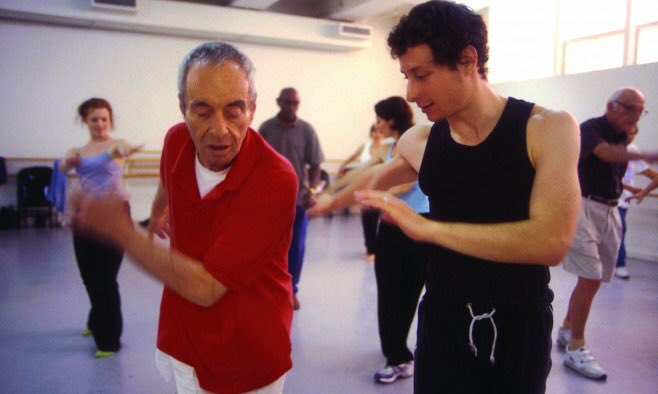
Dance for PD offers an example of a Europe-wide network that designs dance classes for people with Parkinson, focusing on their specific symptoms such as balance, cognition, motor skill, mental health and physical confidence.

Policy implications

In light of the report's findings, WHO calls on governments and authorities to implement policies giving a greater role to arts in public health.
Key policy recommendations include, among others:
• ensuring that communities have access to arts-for-health programmes
• integrating arts into the training of health-care professionals;
• introducing or strengthening referral mechanisms from health professionals to arts programmes

Monday, October 6, 2014

Dance As An Intervention For People With Parkinson's Disease: A Systematic Review And Meta-Analysis

reposted from

Monday, 6 October 2014

Dance As An Intervention For People With Parkinson's Disease: A Systematic Review And Meta-Analysis


Neurosci Biobehav Rev. 2014 Sep 27. pii: S0149-7634(14)00236-X. doi: 10.1016/j.neubiorev.2014.09.009. [Epub ahead of print]

Sharp KHewitt J.


Recent studies suggest dance may be able to improve motor and non-motor disabilities in Parkinson's disease patients. A systematic review and meta-analysis of randomised controlled trials (RCT's) regarding the effectiveness of dance compared with no intervention and other exercise interventions was performed. Five trials were included and methodological quality and mean or standardised mean differences were calculated. Dance significantly improved UPDRS motor scores (-10.73, CI -15.05 to -6.16; P=0.004), berg balance (0.72, CI 0.31 to 1.44; P=0.0006) and gait speed (0.14m/s CI 0.02 to 0.26; P=0.02) when compared with no intervention. When compared with other exercise interventions significant improvements in berg balance (3.98, CI 1.52 to 6.44, P=0.002) and quality of life (PDQ-39) (-4.00, CI -7.13 to -0.87, P=0.01) were found. Dance demonstrates short term clinically meaningful benefits in Parkinson's disease. Future RCT's should be well designed and determine the long term effects of dance, which dose and type of dance is most effective and how dance compares to other exercise therapies.

Thursday, April 10, 2014

Alpha-synuclein in peripheral tissues and body fluids as a biomarker for Parkinson's disease - a systematic review.

Alpha-synuclein in peripheral tissues and body fluids as a biomarker for Parkinson's disease - a systematic review.

Nice up to date review of the field...

Acta Neurol Scand. 2014 Apr 5. doi: 10.1111/ane.12247. [Epub ahead of print]
Malek N, Swallow D, Grosset KA, Anichtchik O, Spillantini M, Grosset DG.

Abstract

Parkinson's disease (PD) is neuropathologically characterized as an alpha-synucleinopathy. Alpha-synuclein-containing inclusions are stained as Lewy bodies and Lewy neurites in the brain, which are the pathological hallmark of PD. However, alpha-synuclein-containing inclusions in PD are not restricted to the central nervous system, but are also found in peripheral tissues. Alpha-synuclein levels can also be measured in body fluids. The aim of this study was to conduct a systematic review of available evidence to determine the utility of alpha-synuclein as a peripheral biomarker of PD. We searched PubMed (1948 to 26 May 2013), Embase (1974 to 26 May 2013), the Cochrane Library (up to 26 May 2013), LILACS (up to 26 May 2013) and CINAHL (up to 26 May 2013) for the studies of alpha-synuclein in peripheral tissues or body fluids in PD. A total of 49 studies fulfilled the search criteria. Peripheral tissues such as colonic mucosa showed a sensitivity of 42-90% and a specificity of 100%; submandibular salivary glands showed sensitivity and specificity of 100%; skin biopsy showed 19% sensitivity and 80% specificity in detecting alpha-synuclein pathology. CSF alpha-synuclein had 71-94% sensitivity and 25-53% specificity for distinguishing PD from controls. Plasma alpha-synuclein had 48-53% sensitivity and 69-85% specificity. Neither plasma nor CSF alpha-synuclein is presently a reliable marker of PD. This differs from alpha-synuclein in solid tissue samples of the enteric and autonomic nervous system, which offer some potential as a surrogate marker of brain synucleinopathy.