Showing posts with label art. Show all posts

Wednesday, November 25, 2020

World's largest study into the impact of arts on physical and mental health

 reposted from

https://www.kcl.ac.uk/news/worlds-largest-study-into-impact-of-arts-on-physical-and-mental-health


World's largest study into the impact of arts on physical and mental health

The world’s largest ever study into the impact and scalability of arts interventions on physical and mental health has been launched by King’s College London and UCL, supported by a £2m award from Wellcome Trust.
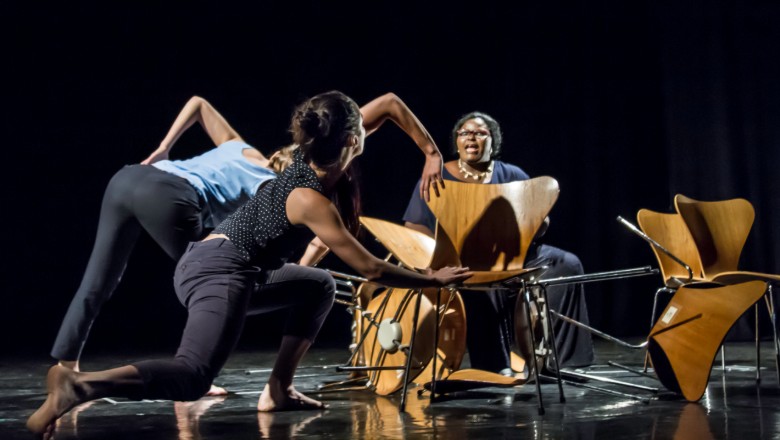
780x440 Stroke Odysseys copyright Pari Naderi
Rosetta Life's Stroke Odysseys © Pari Naderi

Interventions proven to improve patient health, such as singing groups for postnatal depression, dance classes for people with Parkinson’s and movement and music sessions for stroke patients will be trialled among larger groups of people within NHS hospitals and health centres.

SHAPER – Scaling-up Health-Arts Programmes: Implementation and Effectiveness Research – will be led by Professor Carmine Pariante, Professor of Biological Psychiatry at King’s College London and Dr Daisy Fancourt, Associate Professor of Psychobiology & Epidemiology at UCL, alongside a multidisciplinary team of artists, scientists and clinicians brought together by research manager, Dr Tony Woods, and arts advisor, Nikki Crane.

There is growing research on the impact of the arts on health. But more work is needed to take programmes from successful local projects with short-term funding to national programmes commissioned by the health sector.– Professor Carmine Pariante, Professor of Biological Psychiatry at King’s College London

King’s will leverage its connections across King’s Health Partners to trial the interventions alongside Guy’s and St Thomas’, King’s College Hospital and South London and Maudsley NHS Foundation Trusts, as well as community centres across Lambeth and Southwark.

Uniquely, the SHAPER programme will have a stream of work specifically dedicated to examining how the art interventions can be implemented within the NHS, led by Professor Nick Sevdalis and Dr Ioannis Bakolis from the Centre for Implementation Science at King’s College London.

We aim to provide the evidence needed for arts-based interventions to be embedded into NHS treatment pathways, offering effective alternatives to traditional therapies while delivering better results for patients and possible cost savings to the NHS.– Professor Sir Robert Lechler, Senior Vice President/Provost (Health) at King’s College London

Three arts interventions will be offered to patients:

  • Melodies for Mums from Breathe Arts Health Research’s brings together new mothers – referred by GPs, midwives and other health professionals – in singing and music sessions with their babies. Led by Breathe Arts Health Research, Dr Fancourt and Professor Pariante alongside Professor Paola Dazzan, Professor of Neurobiology of Psychosis, it aims to reduce symptoms of postnatal depression.

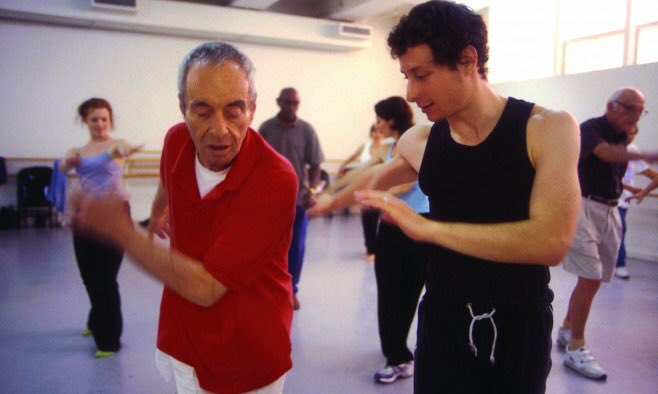
  • Dance for Parkinson’s from English National Ballet (ENB) will be upscaled and tested at King’s College Hospital. Led by Professor K Ray Chaudhuri, Professor of Movement Disorders and Neurology at King’s College London and a Consultant at King’s College Hospital, it will see people with Parkinson’s join weekly ballet classes, incorporating live music, dance, rhythm and voice with specialist ENB dance artists and musicians. Dance for Parkinson’s has been shown to reduce social isolation, benefit emotional and social wellbeing and improve stability, fluidity of movement and posture to support everyday life.

  • Stroke Odysseys, a project delivered by charity Rosetta Life and initially developed and funded by King’s College London and Guy’s and St Thomas’ Charity, will be tested at scale for the first time, led by Professor Nick Ward, Professor of Clinical Neurology and Neurorehabilitation at UCL and Stroke Specialist Consultant Nurse at Guy’s and St Thomas’ NHS Foundation Trust, Angela Roots.

Speaking about Melodies for Mums, Dr Fancourt says: 'Evidence from two years of clinical trials and mechanistic studies of singing has demonstrated the promise of community-led singing programmes as an effective and engaging intervention both for mothers’ mental health and to support the early development of their infants. This programme will allow us to further test the intervention to reach more mothers who could benefit.'

Throughout my career I’ve seen first-hand the many ways in which arts and culture enhance health and wellbeing. The Creative Health report from the All-Party Parliamentary Group for Arts, Health & Wellbeing, for which King’s was research partner, was a reminder of the vast range of arts in health interventions already taking place and the huge opportunities they could present, if proven at scale.– Baroness Bull (Deborah Bull), Vice President & Vice Principal (London) and Senior Advisory Fellow for Culture at King’s College London

Philomena Gibbons, Deputy Director for Culture & Society at Wellcome says: ‘There are many examples which show the impact of embedding arts interventions in mainstream clinical care. But if we are to build up a good evidence base, and develop effective implementation and evaluation models, we need to enable researchers, cultural organisations and clinical care providers to explore this area on a bigger scale.’

To learn more visit King’s Arts, Health & Wellbeing Hub   

Image credits: (L-R) Breathe Arts Health Research, Melodies for Mums, image by Leigha Fearon; Breathe Arts Health Research, Melodies for Mums; English National Ballet, Dance for Parkinson's (c) Laurent Liotardo; English National Ballet, Dance for Parkinson's (c) Rachel Cherry; Rosetta Life, Stroke Odysseys (c) Pari Naderi; Rosetta Life,Stroke Odysseys (c) Pari Naderi.

In this story

Deborah Bull

Deborah Bull

Vice President & Vice Principal (London)

Sunday, November 24, 2019

Arts play major role in health and well-being, WHO says in new report

reposted from
https://www.euronews.com/2019/11/11/arts-play-major-role-in-health-and-well-being-who-says-in-new-report


Arts play major role in health and well-being, WHO says in new report

 COMMENTS
Arts play major role in health and well-being, WHO says in new report
Copyright
ionasnicolae/ Pixabay
TEXT SIZEAaAa
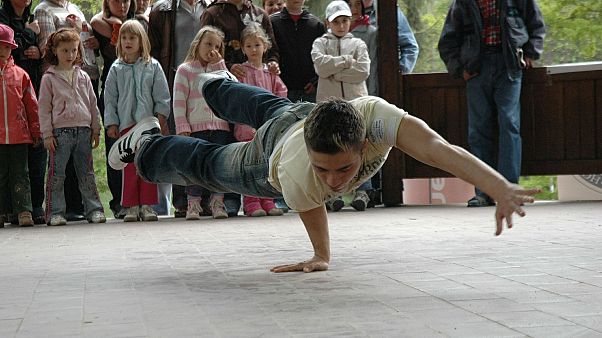
Can we dance our way to better health and well-being? The answer is yes, according to a new study released this Monday by the UN's health body.
“Engaging with the arts can be beneficial for both mental and physical health,” the World Health Organisation (WHO) concluded after conducting “the most comprehensive review of evidence” on the subject to date.
The organisation's Regional office for Europe analysed over 900 global publications and 3,000 studies, with a view to informing public policies.
According to health experts, listening to music helps control blood glucose level, playing an instrument improves the immune system and stress management, while dancing provides benefits throughout the body and mind. Meanwhile, painting or sculpture can help tackle depression.
“The examples cited in this groundbreaking WHO report show ways in which the arts can tackle ‘wicked’ or complex health challenges such as diabetes, obesity and mental ill-health,” said Piroska Östlin, WHO Regional Director for Europe.
The publication will be launched this Monday 08:00 CET during an event in Helsinki, Finland. You can watch the launch event by clicking on the player below.
The report highlights how the arts play a crucial role in well-being from birth to end of life.
“Young children whose parents read to them before bed have longer night-time sleep and improved concentration at school,” WHO said.
Research also shows the benefits of theatre for adolescents or music for older people with dementia.
Arts can furthermore be a valuable resource in emergency situations and organisations such as Clowns Without Borders have developed expertise in this area.
The report says art therapy does not only produce good results but can also be more cost-efficient than standard biomedical treatments.
Arts intervention can furthermore be tailored to have relevance for people from different cultural backgrounds, WHO notes, thus offering “a route to engage minority or hard-to-reach groups.“

Case studies across Europe

The report provides various examples of organisations implementing arts-based approaches to health.
One of them is Arts on Prescription in the UK. Under the scheme, individuals who consult their GP with non-medical problems - such as social isolation - can be referred to a link worker.
“Link workers connect patients with community activities, including participatory arts activities. Local evaluations in different regions have shown benefits for mental health, chronic pain, management of complex and long-term conditions, social support and well-being,” the report found.
In Russia, Doctor Clown has been working in the past decade to improve the experiences of children in orphanages, hospices and hospitals.
Dance for PD offers an example of a Europe-wide network that designs dance classes for people with Parkinson, focusing on their specific symptoms such as balance, cognition, motor skill, mental health and physical confidence.

Policy implications

In light of the report's findings, WHO calls on governments and authorities to implement policies giving a greater role to arts in public health.
Key policy recommendations include, among others:
• ensuring that communities have access to arts-for-health programmes
• integrating arts into the training of health-care professionals;
• introducing or strengthening referral mechanisms from health professionals to arts programmes

Tuesday, August 18, 2015

Ramón y Cajal and the Case for Drawing in Science

reposted from scientific american

Ramón y Cajal and the Case for Drawing in Science

| 
1

As someone who works at the intersection of art and science, I have always found it easy to make the case that all artists are scientists. From the moment we pick up a crayon and make our first mark, we are experimenting. The perceived successes and failures of our craft are indelibly tied to the many variables—physical, chemical and psychological—inherent in the experiences of creating and consuming works of art.
Yet, it seems a longer stretch, somehow, to argue that all scientists are artists. At the very least, in my experience, scientists seem less willing to claim this alternate title. In fact, almost anyone who does not see her or himself as artistically inclined tends to be a little too quick to proclaim, “Oh, I’m not an artist. I can’t even draw a straight line!” With a sigh, I’ll avoid the temptation to digress into the utter irrelevance of straight lines and one’s ability to draw them. Instead, I’d like to posit the idea that, while we may not all identify as artists, scientists, of all people, really should be artists.
Throughout history, much of scientific discovery and advancement has hinged not just on our ability to see certain things, but also on our capacity to reproduce what we see in faithful, critical and/or meaningful ways. The drawings of the famous Spanish neuroscientist Santiago Ramón y Cajal provide an ideal example of this phenomenon.
In the late 1800s, using a novel histological staining technique developed by Italian physician Camillo Golgi, Ramón y Cajal spent countless hours examining brain tissues under the microscope and recording what he saw in pen and ink. As he observed and drew, he eventually deduced that neurons were not just elements of a mesh-like network, but rather discrete cells, and that each conducted impulses in a single direction—from dendrite to axon. This discovery, known as the neuron doctrine, had a profound impact on neuroscience. Paradoxically, Golgi staunchly opposed the neuron doctrine. Nonetheless, in 1906, the two scientists jointly accepted the Nobel Prize for their respective contributions to medical science.
Drawings by Ramón y Cajal of the human sensory cortex

Drawings by Ramón y Cajal of the human sensory cortex (From Wikimedia Commons)
As biomedical imaging techniques continue to advance, those of us who specialize in the visualization of scientific information are often compelled to question the significance of our role. After all, if we can acquire fantastically thin slices of brain tissue, scan them with an electron beam, import the visual data into a computer, and use it to reconstruct a perfectly accurate three-dimensional digital model of brain cells and their connections, then why on earth would we bother with such a tedious and antiquated pursuit as drawing?
In Ramón y Cajal’s day, the case for drawing was easy to make. It wasn’t possible to photograph what could only be seen through a microscope; scientists had to be artists! But if, after the emergence of Golgi’s staining technique, Ramón y Cajal had proceeded to photograph his histological samples instead of drawing them, would his study have yielded the same epic results? I believe the answer lies in Golgi’s confounding resistance to the neuron doctrine. Golgi’s staining technique was essential to Ramón y Cajal’s discovery because it allowed him to see individual neurons in their entirety. Golgi understood the significance of his own contribution, and indeed, upon studying his own samples under the microscope, his eyes must have perceived something very similar to what Ramón y Cajal saw. Yet he interpreted it very differently, and this alternate reading of the same visual information was manifested in his drawings. 
Drawings of the hippocampus by Ramón y Cajal (left) and Camillo Golgi (right)
(From Wikimedia Commons)
No matter how clearly we can see an object, there is something about the physical act of reproducing and interpreting it visually: in making marks, we infuse meaning into each element of the structure before us. Recently, I was asked to draw an animal cell in cross-section as part of an illustration series I was working on. It’s the sort of image any biologist has seen a thousand times in various renditions: a roughly spherical blob with a 90-degree wedge cut out reveals a sampling of organelles floating in cytoplasm.
While I count myself among those to whom this image is almost tediously familiar, I was shocked at how much difficulty I had in trying to draw the large organelle known as the endoplasmic reticulum (or the “ER,” to those in the know). Admittedly, it’s a complex structure composed of membranes folded into repeated convolutions. But still, I’m a fairly seasoned draftsperson with, I thought, a reasonably solid grasp of cell biology. Yet as I struggled through my pencil sketch, I realized that I had never really understood the physical structure of the ER. I could look at existing images as much as I wanted, but it was only the act of drawing the ER that forced me to fully appreciate how it was put together and how it fit into the context of the cell.
Illustration of animal cell
Illustration of animal cell by Amanda Montañez
Perhaps these seem like unfair examples for the case I’m trying to make. I am a professionally trained illustrator, and Ramón y Cajal happened to be an extremely talented and avid draftsman. (As a child, he actually wanted to be an artist, but his father pushed him to pursue medical science instead.) But I would argue that one’s skill level has little effect on the benefit one stands to gain from drawing in science.
Of course, when it comes to communicating science visually to an audience, some artistic skill is usually required. In that sense, Ramón y Cajal’s artistic prowess was fortuitous; it’s why we still use his drawings today, and why we marvel at their beauty as well as the richness of their content. However, I don’t believe that Ramón y Cajal’s big discovery was dependent upon the beauty or even the precision of his neuron drawings; rather, it was the fact that he did draw them, and the process of his drawing, from which the neuron doctrine was born. 
Some of the best science classes I’ve had were those in which the instructor did not just incorporate visual content in their lessons, but actually drew during the lecture and encouraged—or, in some cases, required—students to follow suit. Of these instructors, I can only think of one who drew particularly well; the rest were amateurs at best. But this did not diminish in the least the value of their teaching methods. The act of drawing as an element of the learning process served not only to focus my attention on key facets of the information I was absorbing, but also to solidify important concepts in my mind and help me to retain them long after each course ended. Recently, as an anatomy student charged with learning the entirety of gross human anatomy, I spent a lot of time dissecting cadavers and studying illustrations, but I was never sure I understood each anatomical region or structure until I could draw it.
Personally, I think just about everyone (myself included) could stand to draw more, regardless of her or his skill level. Not only is it fun, it’s a refreshingly immersive and stimulating way to observe the world around us. But moreover, for scientists studying structures and processes in an effort to unlock their mysteries and understand them more fully, a pencil and paper just may be two of the most important tools for success.
The views expressed are those of the author and are not necessarily those of Scientific American.

Wednesday, April 8, 2015

THIS WOMAN SEES 100 TIMES MORE COLORS THAN THE AVERAGE PERSON

reposted from POP Sci - thanks Ilona,

THIS WOMAN SEES 100 TIMES MORE COLORS THAN THE AVERAGE PERSON

A UNIQUE GENETIC MUTATION AND A WELL-WIRED BRAIN MEAN THAT CONCETTA ANTICO IS LIKE NO OTHER ARTIST ON EARTH.
  
 1.1K 
To tetrachromatic artist Concetta Antico, the world is, "like a mosaic of color."
When Concetta Antico looks at a leaf, she sees much more than just green. “Around the edge I’ll see orange or red or purple in the shadow; you might see dark green but I’ll see violet, turquoise, blue,” she said. “It’s like a mosaic of color.”
Antico doesn’t just perceive these colors because she’s an artist who paints in the impressionist style. She’s also a tetrachromat, which means that she has more receptors in her eyes to absorb color. The difference lies in Antico's cones, structures in the eyes that are calibrated to absorb particular wavelengths of light and transmit them to the brain. The average person has three cones, which enables him to see about one million colors. But Antico has four cones, so her eyes are capable of picking up dimensions and nuances of color—an estimated 100 million of them—that the average person cannot. “It’s shocking to me how little color people are seeing,” she said.
"You might see dark green but I’ll see violet, turquoise, blue. It’s like a mosaic of color.”
Although tetrachromats have more receptors in their eyes, their brains are wired the same way as a person with normal vision. So how can a brain like Antico’s change to see more colors? Like anything else, practice makes perfect, even when it comes to neural pathways.
For years, researchers weren’t sure tetrachromacy existed. If it did, they stipulated, it could only be found in people with two X chromosomes. This is because of the genes behind color vision. People who have regular color vision have three cones, tuned to the wavelengths of red, green, and blue. These are connected to the X chromosome—most men have only one, but most women have two. Mutations in the X chromosome cause a person to perceive more or less color, which is why men more commonly have congenital colorblindness than women (if their one X chromosome has a mutation). But the theory stood that if a person received two mutated X chromosomes, she could have four cones instead of the usual three.
This is the case with Antico; researchers confirmed that she is a tetrachromat in 2012. One percent of the world’s population is thought to be tetrachromatic, but it’s not easy to demonstrate empirically. “The difference between
[the color dimensions perceived by]
a tetrachromat and someone with normal vision is not as dramatic as the difference between someone who is colorblind and someone with normal vision,” according to Kimberly Jameson, a cognitive scientist at the Institute for Mathematical Behavioral Sciences at the University of California in Irvine. She and her colleague Alissa Winkler at the University of Nevada in Reno have been studying Antico for about a year to better understand tetrachromacy. The differences in color perception are hard to detect because they’re small, Jameson said, but the tests that are currently used are not designed for more than three pigments--red, green and blue.
Based on Antico's genes, Jameson has determined that Antico's fourth cone absorbs wavelengths that are "reddish-orangey-yellow, but what it appears to Concetta is uncertain at the moment," she added. Since the tests aren't calibrated for this wavelength, empirically demonstrating tetrachromacy is still really difficult.
"Rainbow Gully, Mission Hills, SD"
Jameson and Winkler are on the hunt for more tetrachromats in order to better understand how their brains work. Jameson became fascinated with how people are able to form and communicate concepts, especially when the way they perceive the world can vary so widely. “If you have an extra cone class in the retina, that greatly complicates how that signal might be taking shape as it leaves the retina. We want to understand how that’s happening,” she said. This likely has to do with how the brain wires itself when it receives certain signals frequently over time—a concept called neuroplasticityLots ofstudies about neuroplasticity in animals and some in humans have shown that two individuals with the same capacity for visual perception can have drastically different vision later in life just based on what they were exposed to early on. Researchers still aren’t totally sure why this is the case. “One possibility is that the system learns how to use these signals—the wiring creates the proper code so they can be used in the cortex,” Jameson said.
So even though many more tetrachromats may exist in the world, they may not have exceptional color perception, because they haven’t trained their brains to pay attention. Antico, in this case, presents a rare exception. “I was different than a regular 5-year-old — I was painting at age 7, I was so fascinated with color,” she said. For years, she was exposed to exceptional color, so her brain became wired to take advantage of her tetrachromacy.
"The Cat's Meow"
Antico has a personal stake in the continued research of tetrachromacy. Five years ago, when Antico’s daughter was 7 years old, the family learned that she was colorblind. “I didn’t think it had anything to do with me, but she’s colorblind because of me. I have a mutation,” Antico said. The more she helps scientists understand tetrachromacy, she figures, the better they will be able to help people like her daughter. “If we understand genetic potential for tetrachromacy and how their perception differs, we can understand quite a lot about visual processing of color that we currently don’t understand,” Jameson agreed.
But Antico may have stumbled upon a different way to help those who are color deficient. She is a professional artist who has been teaching painting for over 20 years, and she has a number of students who are colorblind. “One of the things that has been made apparent by looking at their artwork is that they have a good appreciation for color, unlike any other individual who I’ve ever seen that is color deficient,” Jameson said. “It’s very possible that by being tuned in from a very early age to color differences,
[Antico]
may have acquired some understanding and articulation for how to help them do that.” This hypothesis still needs to be proven empirically, of course, but Jameson is intrigued by the prospect of improving people’s perception of color through the training that neuroplasticity allows.
In addition to spending her time helping researchers better understand tetrachromacy, Antico hopes to open an art school for the colorblind and create an online platform for people around the world to discover if they are tetrachromatic. “I want to be sure before I die that I’m able to define tetrochromatism,” she said. “There have to be more tetrachromats out there. Maybe I can lead the way for that.”
Correction (11/10/2014, 11:40 a.m. ET): The original story stated that all men have one X and one Y chromosome and that all women have two X chromosomes. This statement neglected to include those with Klinefelter Syndrome and transgender individuals. We regret the error.
TAGS: