reposted from
https://theconversation.com/why-a-walk-in-the-woods-really-does-help-your-body-and-your-soul-53227


Disclosure statement
Jeffrey Craig receives funding from the National Health and Medical Research Council and the Financial Markets Foundation For Children
Susan Prescott receives funding from the National Health and Medical Research Council of Australia, she is on the Scientific Advisory Board of the Nestle Nutrition Institute and Danone Nutricia Early Life Nutrition. She is the President of the DOHaD Society of Australia and New Zealand, and the Chair of the International Inflammation Network.
Partners

University of Western Australia provides funding as a founding partner of The Conversation AU.
 We believe in the free flow of information
Republish our articles for free, online or in print, under Creative Commons licence.
Have you ever wondered why you feel healthier and happier when you stroll through the trees or frolic by the sea? Is it just that you’re spending time away from work, de-stressing and taking in the view? Or is there more to it?
For more than 20 years, scientists have been trying to determine the mechanisms by which exposure to biodiversity improves health. Japanese scientists pioneered the search when they travelled to the island of Yakushima, famous for its biodiversity.
The Japanese already had a name for the experience of well-being in nature: shinrin-yoku or “forest bathing”.
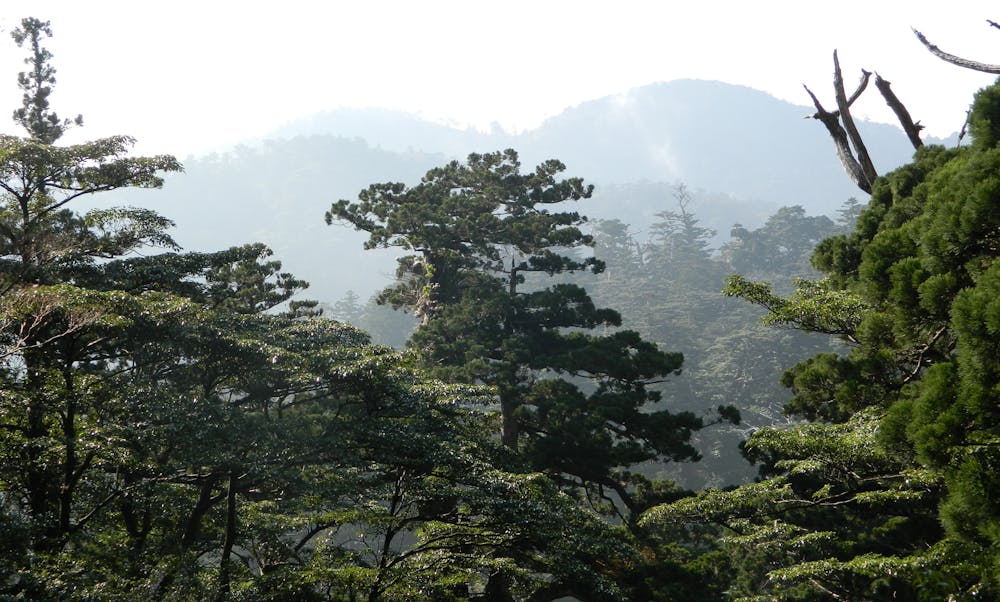
We do know that a diverse ecosystem supports a varied and beneficial microbial community living around and inside us.
We can help you make informed decisions with our independent journalism.
We also know that exposure to green space, even within urban environments, increases our physical and mental well-being. But what are the mechanisms?
The forest air
The Japanese researchers suggested that we are taking in beneficial substances when we breathe forest air.
Research has identified three major inhaled factors that can make us feel healthier. These factors are beneficial bacteria, plant-derived essential oils and negatively-charged ions.
From birth to the grave, beneficial bacteria surround us; they live in the environment and, importantly, in the air we breathe. We also share almost our entire body with them. The more interaction we have with them, the happier and healthier we are.
This is in part due to our gut-dwelling bacteria, which break down the food we cannot digest and produce substances that benefit us both physically and mentally.
Plants and the bacteria living on them can produce essential oils to fight off harmful microorganisms. These are referred to collectively as phytoncides, literally, “plant-derived exterminators”.
Research on the health benefits of plant essential oils is in its infancy. But one recent study found that a phytoncide from Korean pine trees improved the health and bacterial make-up of pigs.
Notwithstanding some of the pseudoscience that gets wrapped around negative ion generating machines, there is evidence that negative air ions may influence mental outlook in beneficial ways. There are relatively higher levels of negative air ions in forested areas and close to bodies of water. This may factor into the benefits of walking in a forest or near the ocean.
But as the German writer Goethe once said:
Nature has neither kernel nor shell; she is everything at once.
Bacteria, essential oils and negative ions interact and influence each other. For example, negative ions and phytoncides may dictate the microbial make-up within a natural environment. There is evidence that this could also be taking place in the human gut.
More to be done
Nature-relatedness, or biophilia in which an individual feels connected to nature, has been linked with better health.
But we have a long way to go before we can more fully understand the mechanisms by which an innate love of nature can benefit our health. An important part of this discussion – an overlooked one in our opinion – is further understanding of an individual’s connection to nature.
Psychologists have convincingly demonstrated connections between nature relatedness and mental well-being. But how does a greater personal affinity to nature interact with dietary habits, personal microbiome, physical activity levels and many other lifestyle variables that might be intertwined with having such an affinity?
In the meantime, while scientists turn over stones and search for important mechanistic clues – including those related to biodiversity – there are many simple ways to capitalise on our biophilia.
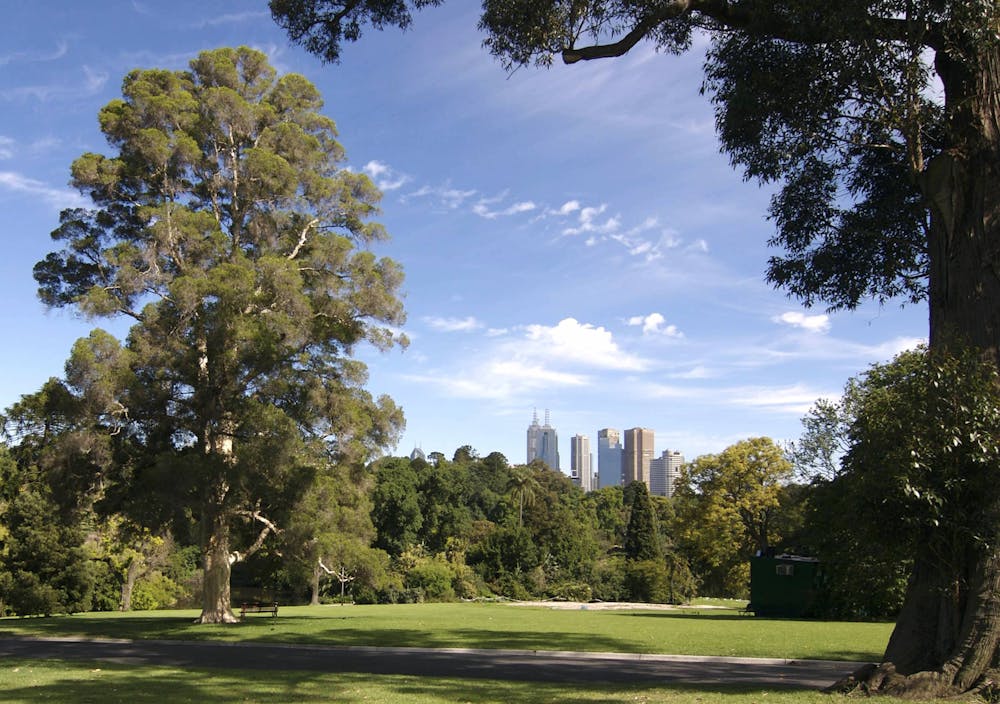
Why not run in the park or by a river instead of on a treadmill, or take a walk through a park on the way to work or at lunchtime?
Critically, there is increasing evidence that we can help shape our children’s mental and physical health by exposing them to more green environments as they work, rest and play. The US-based Children and Nature Network is a great resource of research news and activities bringing children and nature together.
In the World Health Organization report Connecting Global Priorities – Biodiversity and Human Health, released in December last year, it was concluded that:
Considering ‘microbial diversity’ as an ecosystem service provider may contribute to bridging the chasm between ecology and medicine/immunology [… ] the relationships our individual bodies have with our microbiomes are a microcosm for the vital relationships our species shares with countless other organisms with which we share the planet.
It is easy to see that discussions of natural environments and human health are no mere matter of intellectual fancy.
In a paper published last month in Journal of Physiological Anthropology, we’ve called for more research into the links between biodiversity and human physical and mental well-being, particular in relation to childhood, that most formative of times.
Wouldn’t it be good if by nurturing our environment we were also nurturing our children’s future health?


