Showing posts with label moon. Show all posts

Thursday, August 23, 2018

Why 2001: A Space Odyssey feels as revolutionary as ever, 50 years later

reposted from
https://www.pressreader.com/canada/the-globe-and-mail-bc-edition/20180823/281513637008083


https://www.theglobeandmail.com/arts/film/article-why-2001-a-space-odyssey-feels-as-revolutionary-as-ever-50-years/


Gary Lockwood and Keir Dullea are reuniting to celebrate 2001: A Space Odyssey at Fan Expo Canada.
COURTESY GARYLOCKWOOD / KEIR DULLEA

If it is difficult to fathom that it’s now been five decades since the premiere of 2001: A Space Odyssey, consider this equally mind-melting fact: Stanley Kubrick’s film used absolutely zero computer-generated effects, with every visual trick done in camera.
That detail may be thuddingly obvious given the film’s vintage, but it is nonetheless astounding to consider while watching the film today – especially if you’re lucky enough to catch an upcoming screening of the film at Ontario Place’s Cinesphere, which will this week host a special Imax 70mm print of the film, with a restoration overseen by Christopher Nolan. Or, for those hoping to experience some 2001nostalgia in the flesh, there’s next week’s Fan Expo, a celebration of all things “fandom,” where 2001′s stars, Keir Dullea (Dr. Dave Bowman) and Gary Lockwood (Dr. Frank Poole) will appear to commemorate the film’s 50th anniversary.
Ahead of their journey to Toronto’s Metro Convention Centre, The Globe and Mail spoke with Dullea and Lockwood to talk about marketing, CGI, and an ironic fear of air travel.
What was going through your heads as you watched the film’s premiere in Washington, back in 1968?
Keir Dullea: It simply blew me away. I never went to the rushes [where daily footage is shown on-set], so I never saw a foot of film. Everything was a big, extraordinary surprise.
Gary Lockwood: Well, I actually had seen quite a few rushes, and I can only say I saw a lot of things there that were so fantastic, but never made it to the final cut. I think Stanley determined that certain surreal shots didn’t belong in the first section of the film until later on, when Keir is going through the stargate. But watching it during the premiere, it was everything I thought it would be and more.
Did you have any sense of how influential the film might become?
Dullea: Gary is a lot smarter than me, so he’ll tell you his reaction, but I just assumed it would get a lot of attention because it had this big promotional budget from MGM and Stanley was a big name. But you may not remember, the reviews over all were quite terrible. At the New York premiere, for example, 250 people walked out. Within two months, though, there were younger people – the generation who were protesting the Vietnam War – they were lining up for blocks. I think MGM had an idea that this audience was, well, they were smoking let’s say funny cigarettes. So they came out with a new poster two months later that said, “2001: A Space Odyssey: the ultimate trip.”
Lockwood: I was an artist as a kid, a painter, so I’d like to say I had an eye for, I don’t know, symmetry and art. And after watching The Killing, I knew Stanley was way beyond anyone else. So I knew this would be something memorable. When I got the offer to appear in 2001 from my agent, I said to my agent, “How much do I have to pay to be in this movie?” But yeah, when we premiered in Washington, and then New York, no one seemed to like it. But when we were heading to California, and I was sitting on the plane next to Arthur C. Clarke, who told me he couldn’t believe how brilliant Kubrick was, I knew it’d just be a mater of time.

The actors will appear at the event in Toronto, running Aug. 30 through Sept. 2, 2018.
CAROL SUMMERS

What was it like working with Kubrick on the set? He has a reputation for being mercurial, to say the least …

Dullea: He was meticulous, there’s no question about that. He had an eye for detail beyond anyone else. But I loved every minute working with him. He was always calm, and never raised his voice. He was always also open to suggestion. It didn’t mean he’d use it, but you never felt like you were stepping on his toes.
Lockwood: Hail, hail Caesar! Yeah, I can only say that making a great film is an accident.
What do you think about the evolution of outer-space cinema since then. There’s Gravity, and of course Interstellar by Nolan himself.
Lockwood: To me, I can tell CGI, and it doesn’t ever quite work. I know it takes a lot of money, and people do a good job. But there’s a certain lack of reality about it. In 2001, it was models, it was all in front of the camera. I think no one will ever make something better. Well, in time somebody may, but I haven’t seen it yet.
You’ve both been making the rounds on the convention circuit for the past few years. Does it ever get overwhelming to keep revisiting that point in your careers?
Lockwood: Well, I also was in the pilot for the original Star Trek, so I’ve done a lot – a lot – of conventions. You get to see some actor friends, people you haven’t seen in years. Mostly it’s a piece of cake. The only thing I don’t like is flying to the venues. I don’t like to fly very much.
That’s a bit ironic given your most iconic role was as an astronaut …
Dullea: When we did 2001, there were actually three people who wouldn’t fly: Stanley, Gary and me. For the world premiere of the film, we all took one of the RMS Queen Mary’s across the ocean. Stanley was editing on-board the ship.
This interview has been condensed and edited.
2001: A Space Odyssey screens in Imax 70mm at the Ontario Place Cinesphere Aug. 24 through Aug. 30 (ontariplace.com/en/cinesphere); Keir Dullea and Gary Lockwood will appear at this year’s Fan Expo in Toronto, running Aug. 30 through Sept. 2 (fanexpocanada.com)
 REPORT AN ERROR EDITORIAL CODE OF CONDUCT

Friday, October 10, 2014

Total eclipse of Blood Moon

reposted from


Total eclipse of Blood Moon tonight

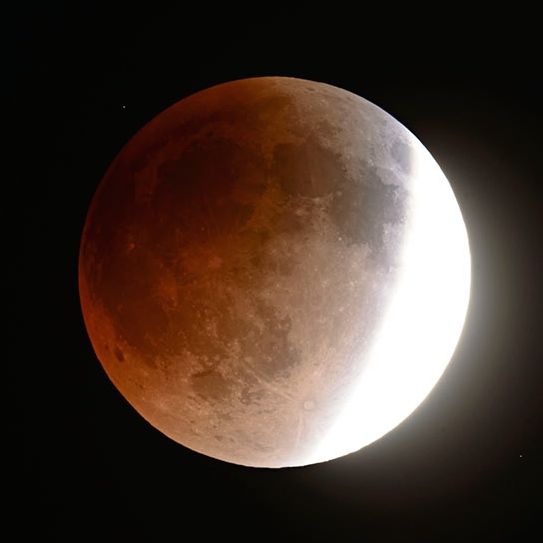
View larger. |  Deep colors in the umbral shadow are revealed in a long exposure 15 minutes before the total phase of the April 14-15, 2014 eclipse begins.  Photo by Fred Espenak.

TONIGHT FOROCTOBER 7, 2014

Tonight – the night of October 7-8, 2014 – there is a total eclipse of the full moon. This is the Northern Hemisphere’s Hunter’s Moon – the full moon after the Harvest Moon. It’s also aBlood Moon, and this eclipse is the second in a series of four so-called Blood Moon eclipses. For North America and the Hawaiian Islands, the total lunar eclipse happens in the wee hoursbefore sunrise on October 8. For New Zealand, Australia and eastern Asia, the total eclipse is seen after sunset on October 8. A partial lunar eclipse can be seen before sunrise October 8 from much of South America, or after sunset October 8 from western Asia. Photo top of post shows a partial phase of the April 14-15, 2014 total lunar eclipse by Fred Espenak. Follow the links below to learn more about the 2014 Hunter’s Moon and the October 8 total lunar eclipse.
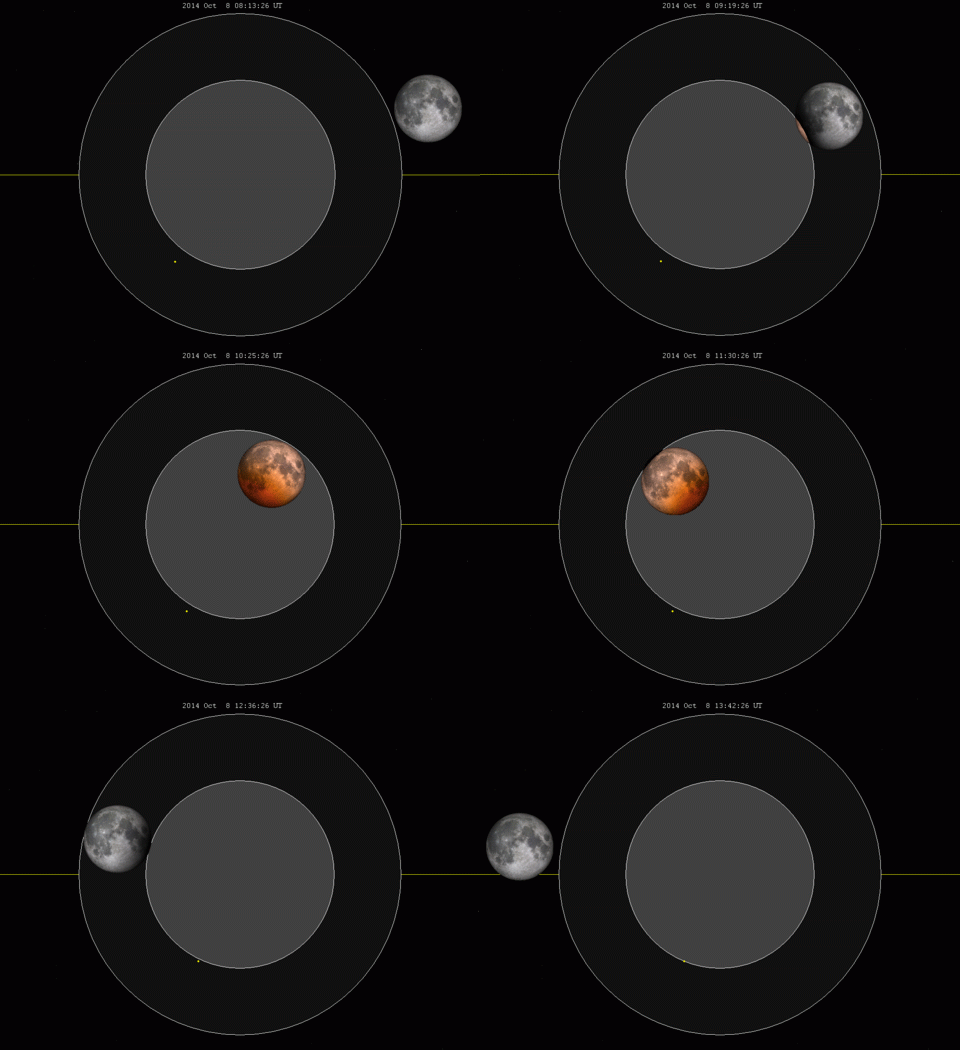
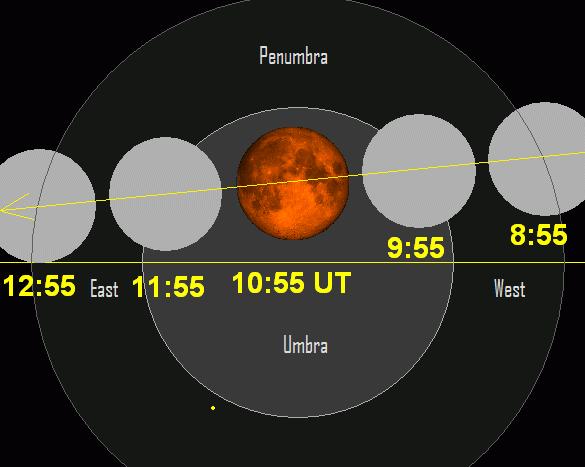
Animation of the October 8, 2014, total lunar eclipse, whereby the moon passes through the Earth's shadow from west to east. The horizontal yellow line depicts the ecliptic. The nearby dim
Animation of the October 8, 2014, total lunar eclipse, whereby the moon passes through the Earth’s shadow from west to east. The horizontal yellow line depicts the ecliptic. The nearby dim “star” is actually the planet Uranus, which may be visible through binoculars. Image credit:Tomruen
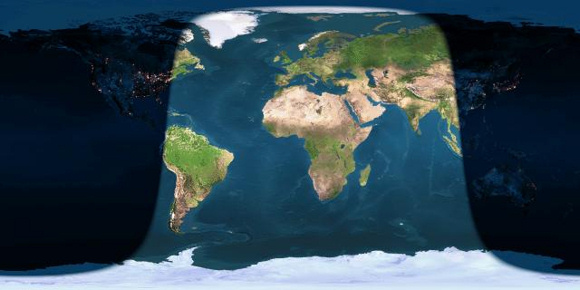
Day and night sides of Earth at instant of the October 2014 full moon
Day and night sides of Earth at instant of the October 2014 full moon (2014 October 8 at 10:51 Universal Time)
Day and night sides of Earth at instant of the October 2014 full moon (2014 October 8 at 10:51 Universal Time)
When is the October 2014 moon exactly full? Generally speaking, we in the Americas will say the moon stays full all through the night tonight, October 7-8.
But to astronomers, the moon turns full at a well-defined instant: when it’s most opposite the sun for the month.
That instant happens on October 8, 2014 at 10:51 UTC. At our U.S. time zones, that places the precise time of full moon on October 8 at 6:51 a.m. EDT, 5:51 a.m CDT, 4:51 a.m. MDT or 3:51 a.m. PDT. At that time, because there’s an eclipse happening, the moon will be totally submerged in the Earth’s dark umbral shadow.
Meanwhile, because of the difference in time zones, this same full moon happens at local midnight (October 7-8) for far-western Alaska and the Aleutian Islands. It’s sunrise (October 8) for northeastern North America and far-western South America, and it’s sunset (October 8) in Asia.
Watch the full-looking moon on the night of October 7-8 rise in the east as the sun goes down. Like any full moon, the Hunter’s Moon will shine all night long. It’ll soar highest in the sky around midnight and will set in the west around sunrise.
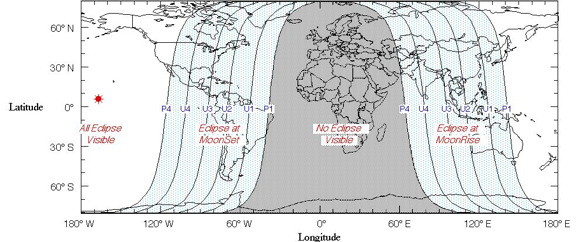
View larger. Worldwide eclipse map courtesy of NASA Eclipse Web Site.
View larger. Worldwide eclipse map courtesy of NASA Eclipse Web Site.
Who will see the October 7-8 total lunar eclipse? The October 2014 full moon passes directly through Earth’s dark (umbral) shadow. The total part of the October 8 eclipse lasts nearly 1 hour. A partial umbral eclipse precedes totality by about one hour and 10 minutes, and follows totality by about the same period of time, so the moon takes about 3 and 1/3 hours to completely sweep through the Earth’s dark shadow.
North America, northeastern South America, the Pacific Ocean, New Zealand, Australia and eastern Asia are in a good position worldwide to watch the total eclipse of the moon on October 8. If you live in the Americas or Hawaii, the total eclipse happens before sunrise October 8. In the world’s eastern hemisphere, the total eclipse happens after sunset October 8.
A very light penumbral eclipse comes before and after the dark (umbral) stage of the lunar eclipse. But this sort of eclipse is so faint that many people won’t even notice it. The penumbral eclipse would be more fun to watch from the moon, where it would be seen as a partial eclipse of the sun.
Who will see the partial lunar eclipse on October 8? A partial lunar eclipse may be visible in the haze of morning dawn from the extreme eastern portion of North America (Newfoundland), and much of South America (except the eastern half of Brazil) before sunrise on October 8. A partial lunar eclipse can also be observed from western Asia (eastern India, Nepal, western China) after sunset on October 8.
The moon moves from west to east across the Earth's shadow. The horizontal yellow line depicts the ecliptic - Earth's orbital plane projected onto the dome of sky. The greatest eclipse takes place on October 8, at 10:55 Universal Time (6:55 a.m. EDT, 5:55 a.m. CDT, 4:55 a.m. MDT or 3:55 a.m. PDT). Click for eclipse computer
The moon moves from west to east across the Earth’s shadow. The horizontal yellow line depicts the ecliptic – Earth’s orbital plane projected onto the dome of sky. The greatest eclipse takes place on October 8, at 10:55 Universal Time (6:55 a.m. EDT, 5:55 a.m. CDT, 4:55 a.m. MDT or 3:55 a.m. PDT). Click for eclipse computer
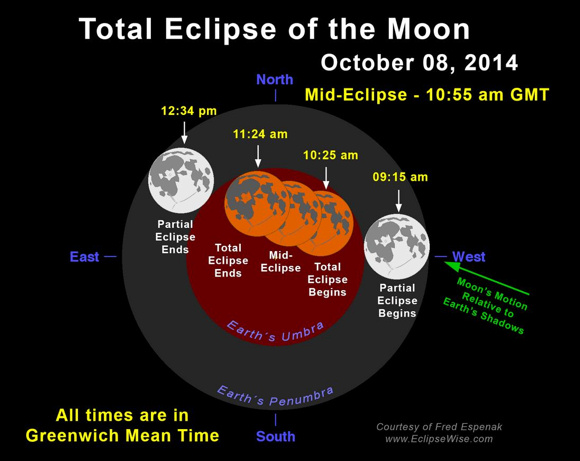
Eclipse times in Universal Time.
Partial umbral eclipse begins: 9:15 Universal Time (UT)
Total eclipse begins: 10:25 UT
Greatest eclipse: 10:55 UT
Total eclipse ends: 11:24 UT
Partial umbral eclipse ends: 12:34 UT
Eclipse times for North American time zones.
Eastern Daylight Time (October 8, 2014)
Partial umbral eclipse begins: 5:15 a.m. EDT on October 8
Total eclipse begins: 6:25 a.m. EDT
Greatest eclipse: 6:55 a.m. EDT
Total eclipse ends: 7:24 a.m. EDT
Partial eclipse ends: 8:34 a.m. EDT
Central Daylight Time (October 8, 2014)
Partial umbral eclipse begins: 4:15 a.m. CDT on October 8
Total eclipse begins: 5:25 a.m. CDT
Greatest eclipse: 5:55 a.m. CDT
Total eclipse ends: 6:24 a.m. CDT
Partial eclipse ends: 7:34 a.m. CDT
Mountain Daylight Time (October 8, 2014)
Partial umbral eclipse begins: 3:15 a.m. MDT on October 8
Total eclipse begins: 4:25 a.m. MDT on October 8
Greatest eclipse: 4:55 a.m. MDT
Total eclipse ends: 5:24 a.m. MDT
Partial eclipse ends: 6:34 a.m. MDT
Pacific Daylight Time (October 8, 2014)
Partial umbral eclipse begins: 2:15 a.m. PDT on October 8
Total eclipse begins: 3:25 a.m. PDT
Greatest eclipse: 3:55 a.m. PDT
Total eclipse ends: 4:24 a.m. PDT
Partial eclipse ends: 5:34 a.m. PDT
Alaskan Daylight Time (October 8, 2014)
Partial umbral eclipse begins: 1:15 a.m. ADT on October 8
Total eclipse begins: 2:25 a.m. ADT
Greatest eclipse: 2:55 a.m. ADT
Total eclipse ends: 3:24 a.m. ADT
Partial eclipse ends: 4:34 a.m. ADT
Hawaii-Aleutian Standard Time (October 7-8, 2014)
Partial umbral eclipse begins: 11:15 p.m. HAST on October 7
Total eclipse begins: 12:25 a.m. HAST on October 8
Greatest eclipse: 12:55 a.m. HAST on October 8
Total eclipse ends: 1:24 a.m. HAST on October 8
Partial eclipse ends: 2:34 a.m. HAST on October 8
View larger. Chart, displaying eclipse phases in Universal Time (GMT), courtesy of EclipseWise.com
View larger. Chart, displaying eclipse phases in Universal Time (GMT), courtesy of EclipseWise.com
A double Blood Moon eclipse on October 8? Okay, we’re saying this a bit tongue in cheek, but somebody is bound to come up with this. In skylore, the Northern Hemisphere’s Hunter’s Moon on October 7-8 will be called a Blood Moon. Plus the October 7-8 total lunar eclipse – the second of four total lunar eclipses in the ongoing lunar tetrad – has been widely called a Blood Moon. Voila. Double Blood Moon.
Hunter’s Moon is just a name. It’s the name for the full moon after the Harvest Moon, which is the full moon nearest the September 23 autumnal equinox. This year, the Harvest Moon came on September 9. That’s why tonight’s moon bears the name Hunter’s Moon.
Blood Moon is just a name, too. It’s one of dozens, maybe hundreds, of full moon names that spring from skylore, a form of folklore centered on the sky. Read about some full moon names here.
In 2014 and 2015, a new usage of the term Blood Moon sprang up. Surely you heard about it at the total lunar eclipse in April 2014. It’s the name being used for the four eclipses of the ongoing lunar tetrad – four total lunar eclipses in a row, each separated from the other by six lunar months (six full moons). Read about the lunar tetrad and about this sort of Blood Moon, here.
Meanwhile, this moon is the Southern Hemisphere’s first full moon of spring. The September 23 equinox ushers in the spring equinox in the southern half of the globe.
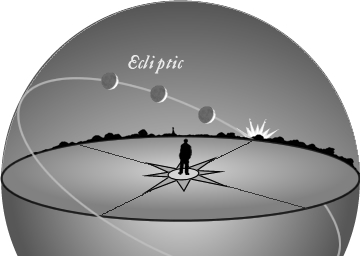
In autumn, the angle of the ecliptic – or sun and moon’s path – makes a narrow angle with the horizon. Image via classicalastronomy.com.
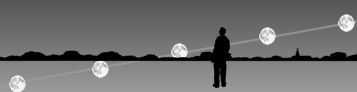
The narrow angle of the ecliptic means the moon rises noticeably farther north on the horizon, from one night to the next. So there is no long period of darkness between sunset and moonrise. Image via classicalastronomy.com.
How is the Hunter’s Moon different from other full moons? The Hunter’s Moon always occurs in autumn. In the Northern Hemisphere, it usually falls in October, although it can come as late as early November. In the Southern Hemisphere, a full moon with Hunter’s Moon characteristics comes in April or May.
Autumn full moons – like the Hunter’s Moon or Harvest Moon – are different from other full moons. That’s because, in autumn, the ecliptic – or path of the sun, moon and planets – makes a narrow angle with the evening horizon. That fact causes several sky phenomena. For example, the location of the moonrise on your horizon, for several nights around a Northern Hemisphere autumn full moon, is noticeably farther north along the eastern horizon for several nights in succession.
It’s this northward movement of the moon along the eastern horizon at moonrise – for several days in a row, around the time of full moon – that gives the Hunter’s Moon its magic.
These more northerly moonrises assure us of earlier-than-usual moonrises around the time of full moon. On average, the moon rises 50 minutes later daily. But at mid-northern latitudes around now, the moon is rising about 30 to 35 minutes later. And farther north, the effect is even more pronounced. For instance, at latitudes close to the Arctic Circle – like at Fairbanks, Alaska – the moon actually rises around 15 to 20 minutes later for several days in a row.
Meanwhile, in the months of September, October and November as seen from the Southern Hemisphere, it’s springtime. In the spring, there is a particularly long time between successive moonrises, around the time of full moon.
Before the advent of electricity, our ancestors knew how to plan nocturnal activity around the full Hunter’s Moon. If you live sufficiently north on the globe, you can count on tonight’s Hunter’s Moon to bring early evening-till-dawn moonlight for the next several nights!
As autumn full moons, the Harvest and Hunter’s Moons show this seasonal effect, though to a lesser extent than usual around now due to an effect known as minor lunar standstill.
Bottom line: The 2014 Hunter’s Moon takes place on the night of October 7-8 for us in the western hemisphere and on the evening of October 8 for the eastern hemisphere. In skylore, the Hunter’s Moon is the full moon after the Harvest Moon, which is the full moon closest to the September equinox. It’s characterized by a shorter-than-usual time between moonrises for several nights in a row around full moon. This 2014 Hunter’s Moon features the second of four total lunar eclipses in the ongoing lunar tetrad. Thus this eclipse will be called a Blood Moon.