Showing posts with label forest. Show all posts

Monday, November 16, 2020

In the green of health: Just 5 minutes of 'green exercise' optimal for good mental health

 reposted from


Science News
from research organizations

In the green of health: Just 5 minutes of 'green exercise' optimal for good mental health

Date:
May 21, 2010
Source:
American Chemical Society
Summary:
How much "green exercise" produces the greatest improvement in mood and sense of personal well-being? A new study has a surprising answer likely to please people in a society with much to do but a little time to do it: Just five minutes of exercise in a park, on a nature trail, or other green space will benefit mental health.
Share:
    
FULL STORY

How much "green exercise" produces the greatest improvement in mood and sense of personal well-being? A new study in the American Chemical Society's semi-monthly journal Environmental Science & Technology has a surprising answer.

The answer is likely to please people in a society with much to do but little time to do it: Just five minutes of exercise in a park, working in a backyard garden, on a nature trail, or other green space will benefit mental health.

Jules Pretty and Jo Barton explain in the study that green exercise is physical activity in the presence of nature. Abundant scientific evidence shows that activity in natural areas decreases the risk of mental illness and improves the sense of well-being. Until now, however, nobody knew how much time people had to spend in green spaces to get those and other benefits.

"For the first time in the scientific literature, we have been able to show dose-response relationships for the positive effects of nature on human mental health," Pretty said.

From an analysis of 1,252 people (of different ages, genders and mental health status) drawn from ten existing studies in the United Kingdom, the authors were able to show that activity in the presence of nature led to mental and physical health improvements.

They analyzed activities such as walking, gardening, cycling, fishing, boating, horse-riding and farming. The greatest health changes occurred in the young and the mentally-ill, although people of all ages and social groups benefited. All natural environments were beneficial including parks in urban settings. Green areas with water added something extra. A blue and green environment seems even better for health, Pretty noted.

From a health policy perspective, the largest positive effect on self-esteem came from a five-minute dose.

"We know from the literature that short-term mental health improvements are protective of long-term health benefits," Pretty said. "So we believe that there would be a large potential benefit to individuals, society and to the costs of the health service if all groups of people were to self-medicate more with green exercise," added Barton.

A challenge for policy makers is that policy recommendations on physical activity are easily stated but rarely adopted widely as public policy, Pretty noted, adding that the economic benefits could be substantial.

Policy frameworks that suggest active living point to the need for changes to physical, social and natural environments, and are more likely to be effective if physical activity becomes an inevitable part of life rather than a matter of daily choice.


Story Source:

Materials provided by American Chemical SocietyNote: Content may be edited for style and length.


Journal Reference:

  1. Jo Barton, Jules Pretty. What is the Best Dose of Nature and Green Exercise for Improving Mental Health? A Multi-Study AnalysisEnvironmental Science & Technology, 2010: 100325142930094 DOI: 10.1021/es903183r

Cite This Page:

American Chemical Society. "In the green of health: Just 5 minutes of 'green exercise' optimal for good mental health." ScienceDaily. ScienceDaily, 21 May 2010. <www.sciencedaily.com/releases/2010/05/100502080414.htm>

Five minutes in the green can boost self esteem

 reposted from


Five minutes in the green can boost self esteem

A man takes a break on a sunny day on the grass of LaFayette Park near the White House in Washington, April 22, 2010. REUTERS/Jonathan Ernst

LONDON (Reuters) - Just five minutes of exercise a day in the great outdoors can improve mental health, according to a study released on Saturday, and policymakers should encourage more people to spend time in parks and gardens.

Researchers from the University of Essex found that as little as five minutes of a “green activity” such as walking, gardening, cycling or farming can boost mood and self esteem.

“We believe that there would be a large potential benefit to individuals, society and to the costs of the health service if all groups of people were to self-medicate more with green exercise,” Barton said in a statement about the study, which was published in the journal Environmental Science & Technology.

Many studies have shown that outdoor exercise can reduce the risk of mental illness and improve a sense of well-being, but Jules Pretty and Jo Barton, who led this study, said that until now no one knew how much time needed to be spent on green exercise for the benefits to show.

Barton and Pretty looked at data from 1,252 people of different ages, genders and mental health status taken from 10 existing studies in Britain.

They analyzed activities such as walking, gardening, cycling, fishing, boating, horse-riding and farming.

They found that the greatest health changes occurred in the young and the mentally ill, although people of all ages and social groups benefited. The largest positive effect on self-esteem came from a five-minute dose of “green exercise.”

All natural environments were beneficial, including parks in towns or cities, they said, but green areas with water appeared to have a more positive effect.

Reporting by Kate Kelland, editing by Paul Casciato

Friday, October 2, 2020

Why a walk in the woods really does help your body and your soul

 reposted from


https://theconversation.com/why-a-walk-in-the-woods-really-does-help-your-body-and-your-soul-53227


Have you ever wondered why you feel healthier and happier when you stroll through the trees or frolic by the sea? Is it just that you’re spending time away from work, de-stressing and taking in the view? Or is there more to it?

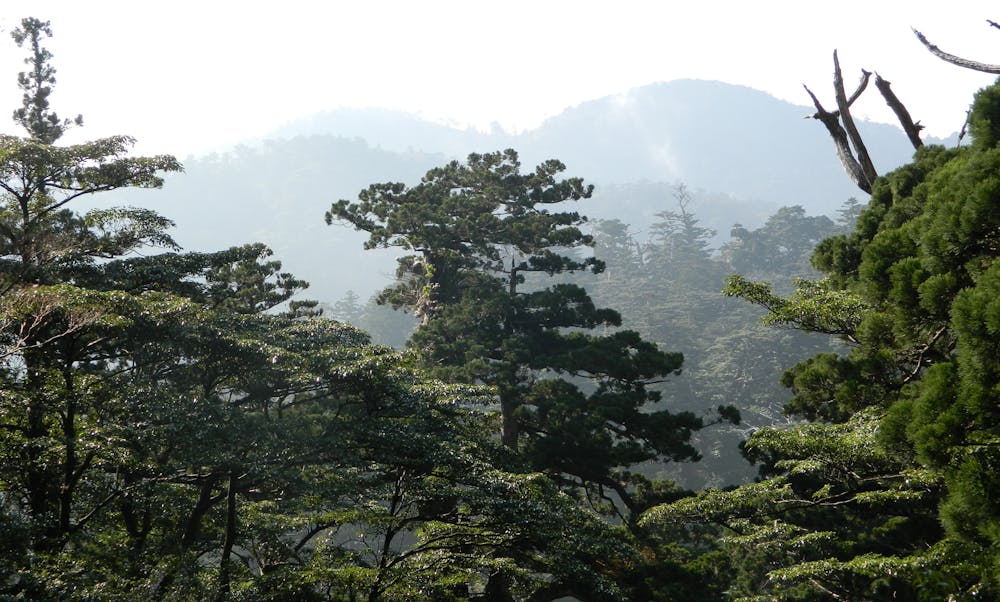
For more than 20 years, scientists have been trying to determine the mechanisms by which exposure to biodiversity improves health. Japanese scientists pioneered the search when they travelled to the island of Yakushima, famous for its biodiversity.

The Japanese already had a name for the experience of well-being in nature: shinrin-yoku or “forest bathing”.

Bathe yourself in the forests of Japan’s Yakushima island. Alan LoganAuthor provided

We do know that a diverse ecosystem supports a varied and beneficial microbial community living around and inside us.

We can help you make informed decisions with our independent journalism.

We also know that exposure to green space, even within urban environments, increases our physical and mental well-being. But what are the mechanisms?

The forest air

The Japanese researchers suggested that we are taking in beneficial substances when we breathe forest air.

Research has identified three major inhaled factors that can make us feel healthier. These factors are beneficial bacteria, plant-derived essential oils and negatively-charged ions.

From birth to the grave, beneficial bacteria surround us; they live in the environment and, importantly, in the air we breathe. We also share almost our entire body with them. The more interaction we have with them, the happier and healthier we are.

This is in part due to our gut-dwelling bacteria, which break down the food we cannot digest and produce substances that benefit us both physically and mentally.

Plants and the bacteria living on them can produce essential oils to fight off harmful microorganisms. These are referred to collectively as phytoncides, literally, “plant-derived exterminators”.

Research on the health benefits of plant essential oils is in its infancy. But one recent study found that a phytoncide from Korean pine trees improved the health and bacterial make-up of pigs.

Notwithstanding some of the pseudoscience that gets wrapped around negative ion generating machines, there is evidence that negative air ions may influence mental outlook in beneficial ways. There are relatively higher levels of negative air ions in forested areas and close to bodies of water. This may factor into the benefits of walking in a forest or near the ocean.

But as the German writer Goethe once said:

Nature has neither kernel nor shell; she is everything at once.

Bacteria, essential oils and negative ions interact and influence each other. For example, negative ions and phytoncides may dictate the microbial make-up within a natural environment. There is evidence that this could also be taking place in the human gut.

More to be done

Nature-relatedness, or biophilia in which an individual feels connected to nature, has been linked with better health.

But we have a long way to go before we can more fully understand the mechanisms by which an innate love of nature can benefit our health. An important part of this discussion – an overlooked one in our opinion – is further understanding of an individual’s connection to nature.

Psychologists have convincingly demonstrated connections between nature relatedness and mental well-being. But how does a greater personal affinity to nature interact with dietary habits, personal microbiome, physical activity levels and many other lifestyle variables that might be intertwined with having such an affinity?

In the meantime, while scientists turn over stones and search for important mechanistic clues – including those related to biodiversity – there are many simple ways to capitalise on our biophilia.

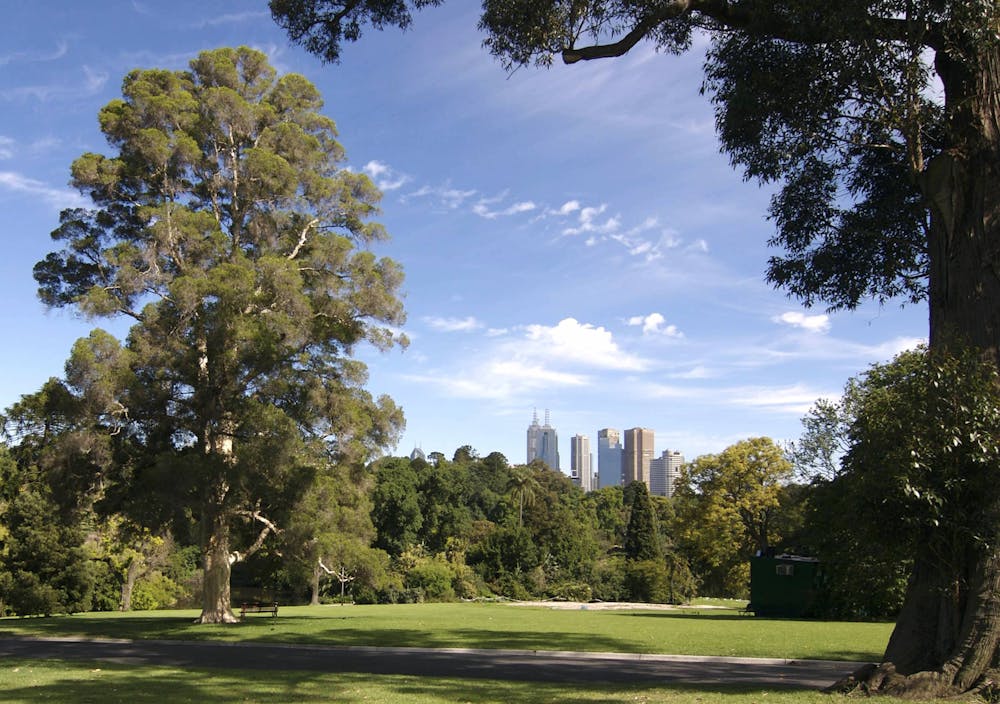
Live in a city? The take time to walk in the city’s parks and gardens such as Melbourne’s Botanical Gardens. Flickr/Stephen BarberCC BY-NC-ND

Why not run in the park or by a river instead of on a treadmill, or take a walk through a park on the way to work or at lunchtime?

Critically, there is increasing evidence that we can help shape our children’s mental and physical health by exposing them to more green environments as they work, rest and play. The US-based Children and Nature Network is a great resource of research news and activities bringing children and nature together.

In the World Health Organization report Connecting Global Priorities – Biodiversity and Human Health, released in December last year, it was concluded that:

Considering ‘microbial diversity’ as an ecosystem service provider may contribute to bridging the chasm between ecology and medicine/immunology [… ] the relationships our individual bodies have with our microbiomes are a microcosm for the vital relationships our species shares with countless other organisms with which we share the planet.

It is easy to see that discussions of natural environments and human health are no mere matter of intellectual fancy.

In a paper published last month in Journal of Physiological Anthropology, we’ve called for more research into the links between biodiversity and human physical and mental well-being, particular in relation to childhood, that most formative of times.

Wouldn’t it be good if by nurturing our environment we were also nurturing our children’s future health?