Showing posts with label mood. Show all posts

Tuesday, June 2, 2020

Tips for how to stay happy in troubling times

reposted .... https://www.bbc.com/future/article/20200317-covid-19-how-to-stay-happy-during-the-coronavirus-outbreak


By dwelling less on stress and reflecting on the positives, BBC Future’s guide to happiness will help you to feel less overwhelmed by world events.
Article continues below
W
With the unfolding global coronavirus pandemic leading to people being confined to their homes, borders being shut and economic instability, it can be hard not to feel overwhelmed by the state of the world at the moment. The good news? Even in times of stress and anxiety, you can take proactive steps to lift your mood.
The science of emotions is incredibly complicated, but it is also well-studied. Over the years, BBC Future has interviewed dozens of world-leading experts in psychology who shared with us practical, everyday tips for coping better with stress. We recently trawled through the research. Here are some of the top tips we found – some of which may surprise you.
1. Distract yourself.
It’s easy to run over and over the topic that’s stressing us out, whether that’s the new coronavirus outbreak, the state of the climate or something else. But stopping people from ruminating on a recent stressful event – by offering a distraction – can lower their blood pressure back to normal levels quicker than offering no distraction.
2. If you meditate, be aware that it might not work for everyone.
In times like these, many people might find meditation and mindfulness helpful. But others might not – for precisely the reason above. For some people, practicing stillness might simply invite rumination. It can be difficult not to think about stressful events when trying to clear our minds. This may be why evidence for the benefits of mindfulness and meditation is patchy. For those people, a more compelling distraction than meditation might be required.
3. Reframe the situation.
How we interpret our emotions is largely down to how they’re framed – in other words, the context. While talking about his 2017 book Happy, Derren Brown gives the example of a tennis player going into a match thinking “I must win”. If they set an expectation that winning is everything, if they start to lose, they feel like an abject failure. This is a trap perfectionists tend to fall into, and it’s why perfectionists tend to respond with more guilt, shame and anger when they feel they aren’t succeeding. They may even be more likely to give up.
The player who goes into a match thinking “I will play the best I can”, however, believes that they are less hurt by losing, so long as they are doing their best. The signs of failure are interpreted differently by both players based on the expectations that they set for themselves.
It’s worth thinking about how you can apply this in your daily life: can each moment or day be about doing the best you can in a stressful situation (“I will practice proper hygiene and social distancing”), rather than focusing on an outcome out of your control (“I will not and cannot get sick”)?
That control part is key. Stressful situations are often beyond our control, and we create anxiety and worry when we try to control what we can’t. Focusing on what can be controlled, on the other hand, can decrease feelings of anxiety.
4. Don’t obsess over being positive or happy.
This one may seem counterintuitive: it can be a bad idea to chase positive emotions. Actively pursuing happiness can lead to the reverse effect. For one thing, the more we focus on our own happiness, the less we focus on the happiness of the people around us, which has been shown to contribute to feelings of isolation and disconnection. There is also a link between searching for happiness and feeling that time is slipping away.
And again, if you’re focused on an outcome like “I must feel happy”, you may feel worse about yourself if you don’t succeed – even though it’s perfectly natural to have a more difficult time feeling happy in stressful times.

We can improve our mood by focusing on the small things that bring happiness to us each day

5. Focus on the small things.
It may be wise, then, to spend less time trying to become happy, and focus more on the little things that make us happy.
In her book Ten Minutes to Happiness, Sandi Mann, a lecturer at the University of Central Lancashire, advocates keeping a daily journal. Her strategy is based on “positive psychology” – a well-established area of psychology that suggests we can improve our mood by focusing on the small things that bring happiness to us each day. Mann says that answering the following six questions, a task that should only take 10 minutes, can help us to find more happiness in life.
1. What experiences, however mundane, gave you pleasure?
2. What praise and feedback did you receive?
3. What were the moments of pure good fortune?
4. What were your achievements, however small?
5. What made you feel grateful?
6. How did you express kindness?
The benefits of keeping a short journal like this are two-fold. When we write, it helps to remind us of the small things that brought us happiness. It also provides us with an archive of everything that has made us happy in the past, which we can reflect on at a later date.
Italians wave next to a banner reading "Tutto Andra Bene" (everything will be OK) (Credit: Getty Images)
6. Clean up – maybe.
Should you find yourself quarantined, take this opportunity to clean your house. "Kondo-ing" your home has been shown to carry many benefits. Clutter makes it harder for us to focus on tasks, so should you find yourself working from home, a quick tidy up might help you to get your jobs done. A messy bedroom has been linked with difficulty sleeping, and messy kitchens with making poor health choices, like reaching for junk food. If you are going to be spending more time in the house, it will be worth your while getting your living spacesin order.
However, de-cluttering is not for everyone. Hoarders use physical objects to reinforce feelings of comfort and security. For those people, tidying up activates the brain’s pain-processing regions.
7. Balance your social media consumption.
Social media might appear to be filled with bad news, but for many it is also a key way to stay updated and connected with friends and loved ones. Keeping your phone out of your bedroom, or self-imposing screen-free time, can help you to balance the negativity with the benefits social media brings.
8. Get out of town.
If you live in a city, another option might be to leave it behind for a short while – only if you can do so while maintaining safe social distancing and safeguarding your, and others’, health.
People in cities suffer from disproportionately high rates of mood disorders. Meanwhile, views of water and blue skies can undo the effects of ill moods. As little as “a 20 to 30% increase in blue space visibility could shift someone from moderate distress into a lower category”, suggests one paper from 2016.
Interestingly, the effect is not seen with green space, so the seaside will be better for you than the country.
So the next time you find yourself worrying about the world, consider taking some of these steps instead of ruminating, refreshing your social media feeds or, perhaps for some, even meditating. Remember: emotions are what we make of them.

Tuesday, February 27, 2018

Editorial: Intrinsic Clocks

reposted from https://www.frontiersin.org/articles/10.3389/fneur.2018.00068/full  and it suggests how important circadian rhythms are for life.....


EDITORIAL ARTICLE

Front. Neurol., 16 February 2018 | https://doi.org/10.3389/fneur.2018.00068

Editorial: Intrinsic Clocks

  • 1Department of Public Health Solutions, National Institute for Health and Welfare (THL), Helsinki, Finland
  • 2Department of Neurophysiology and Neuropharmacology, Medical University of Vienna, Vienna, Austria
Editorial on the Research Topic
The existence of living organisms on our planet has been dependent on and co-evolved with the foreseeable variations in environmental conditions oscillating over recurring periods. All species have responded to these exogenous rhythms by developing endogenous clocks that allow for an approximate, but reliable estimation of the periodic changes and elicit corresponding adaptive processes.
The importance of these mechanisms for health and disease has been highlighted by the 2017 award of the Nobel Prize in Physiology or Medicine to Jeffrey C. Hall, Michael Rosbash, and Michael W. Young for their discoveries of the genetic control of the daily biological rhythm. They explained in molecular terms how the gene named as period contributed to the emergence (eclosion from the pupal case) rhythm of a population and to the locomotor activity of individual flies (Drosophila melanogaster). The key to the explanation was the discovery of transcription-translation feedback loops of the so-called “clock genes.”
This research topic on Intrinsic Clocks which appeared earlier comprises a well-balanced collection of original research and review articles on endogenous rhythms from seasonal and monthly to daily and hourly oscillations in different experimental model systems with analytical approaches from systemic to cellular and molecular levels.
Serchov and Heumann in their review focus on the role of Ras, an enzyme which hydrolyzes guanosine triphosphate and dependent intracellular signaling cascades in the regulation of the circadian rhythm in mice. They elegantly summarize how Ras activity forms a molecular bridge between entrainment of the suprachiasmatic nucleus that is the master clock in the brain and synaptic plasticity in dependent brain regions, such as the hippocampus, and corresponding functions. The extensive study by Chiang et al. specifically investigated rhythmic alterations in the murine hippocampus. They characterized the protein phosphorylation using a mass spectrometry approach with which they provided large-scale quantitative analysis of the daily oscillation of hippocampal phosphorylation events over a range of biological pathways. The hippocampus is a key focus also in the review by Urs Albrecht. It features the role of circadian proteins in the control of adult hippocampal neurogenesis, reciprocally implicated in depression and antidepressant responses. He discusses neurobiological mechanisms implicated in the pathogenesis of mood disorders, such as monoaminergic neurotransmission and stress response by the hypothalamic–pituitary–adrenal axis. The hypothalamus and the pituitary are further involved in seasonal cycles as highlighted in the review by Lewis and Ebling who elaborate in detail on the role of tanycytes, pituitary radial glial cells, in the regulation of circannual clocks in hamsters. They provide evidence supporting their hypothesis that tanycytes serve as central organizers of seasonal rhythms in the adult hypothalamus. Raible et al. present in their review on marine animals the current insight in the cellular mechanisms in molecular detail the monthly or semi-monthly rhythms. They express their worry about light pollution and further review the relevance of circalunar rhythms to mammalian physiology and reproduction in specific. They speculate that these rhythms may be the remnant of evolutionary ancient clocks, which were uncoupled from a natural entrainment mechanism.
Bourguignon and Storch summarize recent findings of the cellular substrate and mechanism, which generate locomotor activity with periods of 2–6 h. Such rhythms are normally integrated with circadian rhythms, but often lack the period stability and expression robustness. They further review the concept of the dopaminergic ultradian oscillator and show that ultradian locomotor rhythms rely on cells in the brain using dopamine for transmission. Intriguingly, Monje et al. report in their study on interleukin-6 knockout mice that the ultradian locomotor rhythm was impaired under both light-entrained and free-running conditions, whereas the circadian period and the level of locomotor activity as well as the phase shift response to light exposure at night remained normal. During the day, Cry1 and Bhlhe41 expression levels were increased whereas those of Nr1d2 were decreased in the hippocampus. Liu and Zhang first created mutants of cryptochrome circadian clock 1 (Cry1) protein at potential phosphorylation sites and conducted thereafter a screen in Cry1/Cry2 double deficient cells. They targeted at identifying mutations that disrupted circadian rhythms. They found that these single amino acid substitutions changed not only the circadian period, but also repression activity, protein stability, or cellular localization of the protein. Concerning the circadian period, Narasimamurthy and Virshup elucidate in their review the molecular mechanisms that regulate an enigma of the clock. Unlike other chemical reactions, the output of the clock as measured with the period remains nearly constant with fluctuations in ambient temperature. This is called as temperature compensation. The key lies especially in the mechanism that controls the stability of period circadian clock 2 protein. Clock-enhancing small molecules have become of particular interest as candidate chronotherapeutics, since there is a close association of circadian amplitude dampening with progression of chronic diseases, especially that of mood disorders. Gloston et al. present in their review an update of the regulatory mechanisms of circadian amplitude and the current status of these small molecules of therapeutic interest. Millius and Ueda introduce the readers to study of biology which takes advantage of engineering and mathematical tools to model and test the behaviors of the intrinsic clocks. It has evolved through the development of both wet lab and in silico work. The goal here is to understand the clocks that are made up of a range of complex properties of cells, tissues, and organisms.
The cross-section of studies comprised in this research topic on Intrinsic Clocks highlights the vibrant scientific activity in the field of the investigation of endogenous biological rhythms and their relevance for physiology and pathology.

Author Contributions

TP and DP planned and wrote the manuscript together.

Conflict of Interest Statement

The authors declare that the research was conducted in the absence of any commercial or financial relationships that could be construed as a potential conflict of interest.
Keywords: circadian rhythm, depression, marine biology, mouse model, plasticity, seasonality, small-molecule, systems biology
Citation: Partonen T and Pollak DD (2018) Editorial: Intrinsic Clocks. Front. Neurol. 9:68. doi: 10.3389/fneur.2018.00068
Received: 04 December 2017; Accepted: 29 January 2018;
Published: 16 February 2018
Edited and Reviewed by: Yves A. Dauvilliers, Hôpital Gui De Chauliac, France
Copyright: © 2018 Partonen and Pollak. This is an open-access article distributed under the terms of the Creative Commons Attribution License (CC BY). The use, distribution or reproduction in other forums is permitted, provided the original author(s) and the copyright owner are credited and that the original publication in this journal is cited, in accordance with accepted academic practice. No use, distribution or reproduction is permitted which does not comply with these terms.
*Correspondence: Timo Partonen, timo.partonen@thl.fi

Friday, August 12, 2016

Change your walking style, change your mood

reposted from

Change your walking style, change your mood

 LEARNING IN MACHINES & BRAINS NEWS 15.10.2014

Our mood can affect how we walk — slump-shouldered if we’re sad, bouncing along if we’re happy. Now researchers have shown it works the other way too — making people imitate a happy or sad way of walking actually affects their mood.
Subjects who were prompted to walk in a more depressed style, with less arm movement and their shoulders rolled forward, experienced worse moods than those who were induced to walk in a happier style, according to the study published in the Journal of Behavior Therapy and Experimental Psychiatry.
CIFAR Senior Fellow Nikolaus Troje (Queen’s University), a co-author on the paper, has shown in past research that depressed people move very differently than happy people.
“It is not surprising that our mood, the way we feel, affects how we walk, but we want to see whether the way we move also affects how we feel,” Troje says.
He and his colleagues showed subjects a list of positive and negative words, such as “pretty,” “afraid” and “anxious” and then asked them to walk on a treadmill while they measured their gait and posture. A screen showed the subjects a gauge that moved left or right depending on whether their walking style was more depressed or happier. But the subjects didn’t know what the gauge was measuring. Researchers told some subjects to try and move the gauge left, while others were told to move it right.
“They would learn very quickly to walk the way we wanted them to walk,” Troje says.
Afterward, the subjects had to write down as many words as they could remember from the earlier list of positive and negative words. Those who had been walking in a depressed style remembered many more negative words. The difference in recall suggests that the depressed walking style actually created a more depressed mood.
The study builds on our understanding of how mood can affect memory. Clinically depressed patients are known to remember negative events, particularly those about themselves, much more than positive life events, Troje says. And remembering the bad makes them feel even worse.
“If you can break that self-perpetuating cycle, you might have a strong therapeutic tool to work with depressive patients.”
The study also contributes to the questions asked in CIFAR’s Learning in Machines & Brains program (formerly known as Neural Computation & Adaptive Perception), which aims to unlock the mystery of how our brains convert sensory stimuli into information and to recreate human-style learning in computers.
“As social animals we spend so much time watching other people, and we are experts at retrieving information about other people from all sorts of different sources,” Troje says. Those sources include facial expression, posture and body movement. Developing a better understanding of the biological algorithms in our brains that process stimuli — including information from our own movements — can help researchers develop better artificial intelligence, while learning more about ourselves in the process.

Thursday, November 20, 2014

The doctor will dance for you now

reposted from

The doctor will dance for you now

Why are French clowns invading hospitals and should there be dancing in the wards? Meet the performers injecting fresh blood into medical training
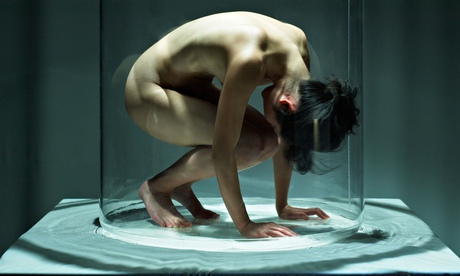
Underglass, Clod Ensemble
Using the body to heal the body … Underglass, by Clod Ensemble, part of the Performing Medicine project. Photograph: Manuel Vason
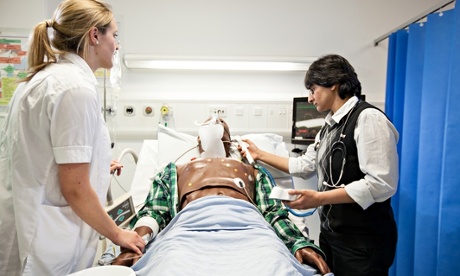
Amid hi-tech machines, a blood-smeared body lies on a hospital bed with what looks like a bullethole in its side. It’s a mannequin, but one that sweats, breathes and bleeds. The room feels like the sort of eerily accurate A&E ward you might stray into at a Punchdrunk immersive theatre performance. But this is not a scene set for an audience. Instead, it’s part of a new £500,000 project at St Thomas’ hospital in Londonto train doctors, nurses and paramedics in physical theatre.
Performing Medicine is led by director Suzy Willson and her company Clod Ensemble. She has been working with medical students for a number of years, but this project – funded by Guy’s and St Thomas’ Charity – is the first to be embedded in a real hospital, working with frontline staff. Performers will work with the Simulation and Interactive Learning Centre (SaIL) at St Thomas’, which allows doctors, nurses and paramedics to experience emergencies before they have to attend them for real.
“It’s sometimes quite hard to get doctors to realise there’s an art to medicine,” says the centre’s Dr Peter Jaye. “Because to some extent it’s been pummelled out by science.”
Walking into SaIL, you immediately find yourself in a theatre of sorts. The hospital already uses sets and actors to train staff. Now, Performing Medicine will teach body language and communication skills through clowning, mime, and dance techniques. Willson will teach “the neutral mask”, a technique for getting actors to notice their own physical habits that she learned at the Lecoq theatre school in Paris. They’ll also work with touch – important for staff who have such an intimate relationship with patients, and improvisation – an overlooked skill in medicine, says Willson.
“Arts can offer a more lateral way of thinking,” she says. “There’s been a lot of research in medical humanities about people’s tolerance for ambiguity, and medical students have a very low tolerance for ambiguity. They’re so scared that they’ll get the wrong answer, they freeze.” The training will allow medical staff to step out of what Willson calls a “macho, competitive culture” on wards.
“Medical training is fairly regimental,” says Jaye. “I came out of medical school thinking I’d be able to diagnose everybody I saw with a condition that I could treat. That turns out not to be the case.”
For Jaye, the most important thing to impart in training is compassion – a key NHS buzzword after the fallout from the Mid Staffordshire hospital scandal. “There’s no doubt that healthcare may have lost its way with compassion as we’ve pursued this medicalised model of care,” he says. “I’m really frustrated by the way we’re reducing people to targets.”
Sail Centre St Thomas's hospital
Dress rehearsal … staff at the Simulation and Interactive Learning Centre at St Thomas’ hospital in London
Anne Marie Rafferty is professor of nursing policy at Florence Nightingale Faculty of Nursing and Midwifery at King’s College London, which will be involved with Performing Medicine. She says dance could help nursing staff create a better environment for patients. “Someone said to me once, 60% of our communication is non-verbal, so being aware of your physical presence, how you move and carry yourself and the energy you give out can set the tone in a ward.” For the patients, says Rafferty, “It’s about how safe you feel. If you walk into a ward and there’s a calm hum and people are smiling, there’s a lightness, as opposed to people running around like headless chickens.”
There is a growing body of evidence that artistic interventions can be beneficial for patients. Choreographer Joe Moran runs the Dance Art Foundation, which is currently touring hospitals. The dancers perform in public hospital spaces – foyers, coffee shops, waiting rooms – and in wards, often to people who have never seen contemporary dance before. “I feel like the hospital is a new frontier in performance,” Moran says.
If watching dance can be beneficial for patients, it’s also rewarding for the artists, says Moran. “We’ve had some very experienced dancers who’ve said this has been the most powerful performance experience they’ve ever had,” he says.
The close proximity of the audience, their lack of expectations and, most poignantly, performing in a place where people are acutely aware of their own bodies, adds up to something profound. Hospitals are often places of extreme emotion and distress. “I think the weight of that informs the nature of the encounter and the sense of meaning of the work.” Although Moran admits he has to be careful about those meanings taking on unplanned significance. In a hospital setting, a piece of Moran’s titled All Clear suddenly became loaded with significance, while a score with a single metronome sounded like a life-support machine. For doctors and nurses, Dr Jaye says the most important thing theatre and dance techniques can impart in training is humanity. “You’re present at the worst moments in people’s lives,” says Jaye, and doctors insulate themselves from those emotions in a way that can be detrimental to their own mental health. “I was taught to build a box around myself to protect myself. I built it really strong, out of concrete,” he says, which cut off his empathy with patients as well as his own emotions. “We’re not compassionate with ourselves, and it’s imperative that we start dealing with that.”
• Dance Art Foundation perform at St Thomas’ hospital, London, on 3 November, then touring.

More dance coverage