From innovative teaching to human rights to breast cancer treatment reform, this Carleton professor is relentless in her pursuit for change.
The assignment: Multiculturalism and republicanism – draw and contrast.
It’s a puzzle Melanie Adrian’s students at Carleton University are mulling over in small groups shortly after 5 p.m. on an already dark, mid-fall afternoon. It could be classic snooze-button time for any student grinding through the final hour of a three-hour lecture at the back end of term. Not here. The room is full of chatter. Nobody looks quite sure what they’re doing, yet there are smiles, laughter, debates, and pencils scribbling on handouts featuring two differently sized circles, several arrows and stick-people – suggestions only, to prime students’ creative and intellectual pumps.
Dr. Adrian, a law and legal studies professor, moves from one group to another, leaning over to size up what each has so far. She isn’t totally sure this exercise is going to work either. And she’s running out of time for today.
“I’ve seen some fabulous diagrams,” she says, advising students to bring their drawings to a subsequent class so they can carry on the discussion. “Please think about it over the next two weeks. There’s no right or wrong here. We’re contrasting them. They’re experiments.”
Experimenting and taking risks are natural territory for Dr. Adrian. That’s probably not a bad thing for a surfing enthusiast who rides the waves off the Californian and Mexican Pacific coast whenever possible and who teaches and writes about the often touchy intersection between religion and human rights. Today’s class – about limitations and restrictions on people’s freedom of belief – includes a discussion about students’ experience of the fatal Oct. 22 shooting attack in Ottawa and its connections to Islam that were later presented in the media.
Since Dr. Adrian started teaching at Carleton in 2010, she has brought in local slam poets and used hip hop music from the Middle East and Africa to help students connect more deeply with such fundamental human-rights legal concepts as democracy and freedom. Last year the pre-tenured professor raised eyebrows by allowing students taking her third-year international human rights law course to spend the first three weeks deciding what they would learn and how they would be assessed. The United Nations-style setting was intended to get students grappling with the fundamental practices they would be studying: negotiation, agreement and the application of democratic principles. Students commented at the end of term that being put in the driver’s seat of their own learning pushed them to ask more questions, find out what really interested them and fully engage with the topic.
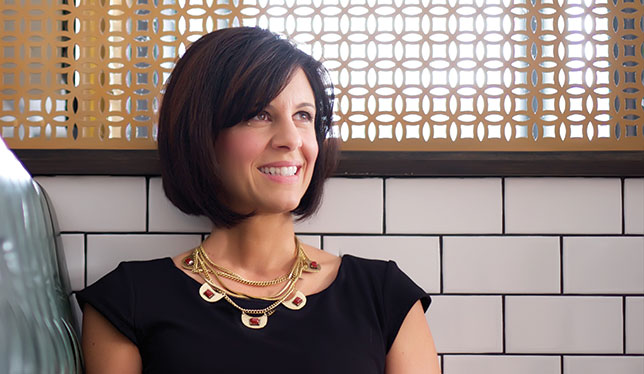
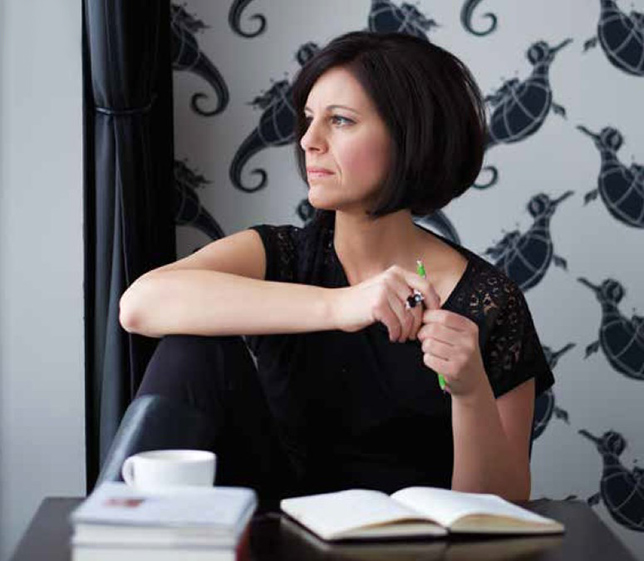
Whatever her interests, law professor Melanie Adrian pursues it all with a trail-blazing passion. Photos by Scott Adamson.
“Melanie is a really great example of what happens when you take student voices seriously,” says Samah Sabra, a coordinator in Carleton’s Educational Development Centre who is researching the pedagogical outcomes of Dr. Adrian’s third-year course.
“Relentlessly innovative,” adds her law department colleague Vincent Kazmierski. “She’s an incredibly passionate person and she brings that passion to her teaching.”
Dr. Adrian’s student-centered style earned her a Carleton University New Faculty Excellence in Teaching Award in 2014. At year end, she learned she’d won one of the five distinguished Teaching Achievement Awards that the university bestows annually.
For former student Carla Carbajal, who took Dr. Adrian’s first-year law course four years ago, the assignment to present a hip hop song allowed her to connect her past – she had emigrated as a teenager from a dangerous neighbourhood in El Salvador – to her studies in Canada where she was still struggling to find her place. For a course project, she returned to El Salvador to do research in a school for children with intellectual disabilities and interview government officials about laws regarding child protection. Dr. Adrian even helped her organize an in-class bake sale to raise money for the school. Ms. Carbajal went far beyond what was needed for a first-year course, but her classroom experience had lit a fire: “I told other students, ‘Make sure you take a class with Dr. Melanie Adrian, because she will change your life and she will show you what university should be like.’”
A deliberate and creative approach to constructing meaningful learning – her own and others’ – has been standard practice for Dr. Adrian throughout her academic career. She also has a gift for persuading others to make allowances for the new trail she may need to blaze to get there – a friend says she could sell a used tea bag if required. Her warm, energetic personality, genuine interest in people and knack for making contacts haven’t hurt either.
Dr. Adrian embarked on her first ethnographic study during an under-graduate co-op term with an Asian human rights organization in 1995, when she interviewed people on the margins of Hong Kong society. She had no idea that that was what she was doing – “I just really wanted to go and talk to people and get to know their stories and write them down” – but she nevertheless convinced a professor at the University of Waterloo to accept the work for credit, and presented it to interested faculty and students when she got back.
“I charted out a very different course,” she says about her first degree in religious studies with a minor in peace and conflict. It was where she began developing an academic interest in Islam (she has no religious affiliation herself). The degree program was something she used to “get to know areas of the world I didn’t know. … I got an idea, then I convinced the administration to let me do it as a co-op term.”
Her persuasiveness and focus on exactly what she wanted to learn carried into her doctoral work at Harvard University in religious studies and human rights. Unable to find any one department that was able to supervise the work she wanted to do, she crafted her own interdisciplinary doctorate straddling religion and anthropology.
“It takes a lot of courage to do that. … She was the only student I have worked with who put together her own PhD program,” says Kimberly Theidon, a medical anthropologist who supervised Dr. Adrian at Harvard (she’s currently a fellow at the Woodrow Wilson International Center in Washington, D.C. and associate research professor at Tufts University). She credits her student for being “willing to follow the questions to where they take her.”
The doctoral candidate began by researching Muslims in Peru but switched focus to the divisive controversy unfolding in France over the display of religious symbols in schools, including a ban against Muslim girls wearing head scarves. She wanted to find out what the state’s position would mean for young Muslim women. “I just didn’t understand why they would go that far,” she says about the recommendations from France’s Stasi Commission in late 2003.
A commission member helped her arrange a one-year English teaching position at a high school in a Paris suburb and get clearance for the deep access she felt she needed. She soon found such banlieues had residents who were second- and third-generation French citizens yet were so isolated that they struggled to be accepted as French by those outside. Even the school she worked and lived in was divided: it had an academic program that educated mostly white middle- and upper-class students bussed in from outside the neighbourhood and a more volatile trades program filled with students of immigrant backgrounds from the immediate neighbourhood who lived with poverty, crime and violence.
Then the riots of October and November 2005 broke out. Some 250 cars were burned in the school’s vicinity. By day, Dr. Adrian would teach and learn from her students. But on several nights, some returned to help firebomb the school and staff residences, where she lived, targeted as a state symbol. Their English teacher helped put the fires out, but she spent many a night lying awake wondering if she’d be burned alive in her bed. She realized that she was caught up in a conflict too big to be personal.
She turned it into a teachable moment. In her trades classes she would hold up a newspaper clipping about the events from the night before and simply ask, “Why?” With her more privileged students, she would write provocative statements on the blackboard, such as “France is racist,” and let an animated discussion ensue, something she says could only happen because an atmosphere of mutual respect and trust had already been established. Students were practising their English, certainly, but their teacher also gained a window into their worlds and opinions. She used hip hop music for the first time as another conversational springboard.
What she learned forms part of her first book, Risking Religious Freedom: France, Muslims and the Right to Act on Faith, expected to be published in the fall of 2015. Among the insights she came away with was “a very deep appreciation of how local and domestic concerns can shape and create policy that either is or isn’t in conformity with human rights norms.”
While she understands France’s reasons for banning the hijab in schools, she doesn’t believe it’s a good policy and worries this and other similar policies are putting liberalism at risk: “If the state can tell you what you can put on your head, what else can it tell you?”
Negotiating space for cultural difference was something Dr. Adrian learned at a young age. She grew up with three sisters in a German-Canadian household in Waterloo, Ontario, that more often than not put up visiting students from all over the world. Over a 15-year period the family hosted more than 30 students who stayed from six months to a year.
As well, her parents had “a really strong focus on justice. It was part of my daily life from the time I can remember.” Her late father, Werner, was a respected optometry professor and inventor at the University of Waterloo. Her mother, Elisabeth, was a role model for openness and community involvement, someone who rolled up her sleeves and helped when she saw someone or something that needed attention.
“We talked about the world, but the world was at our table,” says Dr. Adrian. Such an experience, she says, “creates a very specific type of environment that is outward-looking, receptive to culture and ideas, that forces you to negotiate your identity all the time. … I have sisters and brothers around the world because of that.” As a high-school student, she travelled on international exchanges, becoming fluent in Spanish and French.
Her pedagogical ideas really started to germinate when she became a Harvard lecturer after finishing her PhD in 2007. During those “three wonderful years,” she experimented with variations on flipped classrooms and field trips to religious sites, even art galleries, to help students connect what was being discussed in the classroom to how it played out in the world beyond Harvard.
Her legal orientation had come from her master’s program under the direction of the late Kevin Boyle, a human rights lawyer and activist at the University of Essex. Once she arrived on campus in 1998, she learned that the star attraction that had drawn her to Essex in the first place was on sabbatical. She negotiated her way into doing research for Dr. Boyle during his break and he helped pave her way by bringing her along on his speaking engagements – one to the British parliament on interreligious dialogue – and promoted her CV to academics in the field once she announced her intention to pursue a doctorate. She believes that supporting students in that way is “the kind of thing we in academia have to do.”
The concept of risk took on a very personal dimension in early 2011. Just months into her first tenure-track position at Carleton and weeks after returning from another surfing vacation, she was diagnosed with invasive breast cancer. Amid the shock and horror of the news was also disbelief that the only treatment she was offered was a classic mastectomy with reconstruction to follow later. At just 37 and with all the attention breast cancer had been receiving, she could not accept that that was her only option.
“It just seemed so barbaric to me that we have been running, walking, jumping, flying, biking for the cure … and the only thing that these surgeons can tell me is that ‘You’ve gotta cut it off?’ It just didn’t compute to me,” she says.
Within a couple of weeks she had worked her international contacts and learned that she was a good candidate for another procedure. A skin- sparing mastectomy removes all but the breast’s skin envelope, and the breast is rebuilt right then. The challenge was finding someone who could do it in Canada – fast. Meanwhile, she was finishing the winter term at Carleton, teaching an online course through Harvard, and consulting for UNICEF on an evaluation of its development programs in the context of international human rights law.
The call that she had an appointment with Nicole Hodgson, a surgeon performing the skin-sparing procedure at Hamilton’s Juravinski Cancer Centre, came while she was in Senegal in early May for UNICEF. She had less than two days to make it to the Hamilton clinic.
“Our administrative assistant had to sell her first child to Air France to get me a seat from Dhakar to Toronto,” she jokes. Before the end of the month she’d had the operation, revealing that her cancer was advanced. That required a full suite of follow-up treatments – aggressive chemo-therapy and radiation, with their own side effects and life-altering considerations, things that Dr. Adrian believes can be too easily glossed over by doctors intent on saving patients’ lives.
An anthropologist, she talked to other cancer patients and found the systemic pitfalls she’d dealt with were common, and that “really, really bothered me.” As a human rights champion, she decided to do something about it.
She sought out senior administrators from the Ottawa Hospital and started talking to them about why she’d had the experience she’d had and what could be done to give breast cancer patients equal and hassle-free access to all the information and treatments available. They were receptive, although the hospital says it was already moving along the same lines. “I see the change,” she says, crediting those in charge for hiring surgeons who could offer expanded treatment options. A hospital expansion will consolidate all its breast cancer specialists and services into one hub.
However, the true shift, she realized, had to happen among patients so that they could take an equal seat at the table of their own treatment. So, with lots of help from friends, former students, cancer survivors and specialists, she founded
Be the Choice, a not-for-profit organization whose goal is to give breast cancer patients the knowledge and language they need to make more informed choices about their care. Its key project is the development of a multilingual, online decision tree that takes the user step by step through the questions they need to consider and ask, and options that can be available, depending on the patient’s type of cancer and stage of life.
“This is not about removing the doctor at all,” says Dr. Adrian, whose group has consulted heavily with expert physicians during the tool’s development. “This is about empowering, informing, so patients have a more interesting conversation with their doctor.”
Throwing herself into such an intensive project while still recovering from cancer treatment herself does not surprise those who know her. Her mother, also a breast cancer survivor, says her daughter is someone “who goes as far as she can get. She’s not afraid.”
“It’s a testament to her passion,” says Robin Beasley, a Carleton colleague who was diagnosed with breast cancer at age 40, shortly after Dr. Adrian, and who co-founded Be the Choice with her. “Her vision is making change for women in Ottawa and across the country. It’s about making things accessible.”
With Be the Choice’s decision-making tool nearly ready to launch (bethechoice.org), Dr. Adrian climbed back onto her beloved surfboard and the Pacific Ocean’s waves this winter while finishing her book. But before she left, she was making plans to take her students “to a whole new pedagogical zone” when she’s back in Ottawa this summer. In her summer course on social justice and human rights, she wants to incorporate student interviews with high-profile “justice makers” and members of the Ottawa community, to encourage students to think deeply about what it takes to be an ethical decision-maker.
She explains, “I don’t just teach for knowledge’s sake. I teach so I can hopefully spark a passion or an interest in the students. If the students leave with the idea that their critical thinking is necessary and useful and that they can contribute by engaging in that kind of thought, then I feel that I’ve done my job.”