Scientists can livestream how the mouse brain’s hippocampus maps the physical world and accesses those memories.
By Sukanya Charuchandra | June 12, 2018
The mouse moves through the virtual world of a video game with the help of a Styrofoam ball that floats on compressed air.THOMAS HAINMÜLLER, MARLENE BARTOSResearchers looked into the brains of live mice experiencing a virtual environment to see how neurons were altered through the process of memory consolidation, according to research published June 6 in Nature.
A look into memory: A video recording shows neurons begin to flash as soon as they are activated.THOMAS HAINMÜLLER, MARLENE BARTOS
“As the mouse is getting to know its environment, we use a special microscope to look from the outside into its brain and we record the activities of its nerve cells on video,” Thomas Hainmüller, a coauthor on the study, says in a statement. He and his colleague found that the mouse’s location within the game would trigger specific neurons among a group of cells that was engineered to light up when activated. The resulting neural map reflected memories of different areas within the virtual environment.
Toronto project demonstrates healing power of arts
The Art Heals Health project is working to bring music, dance, comedy and painting into the medical mainstream. Here are three artists using their talents to help patients.
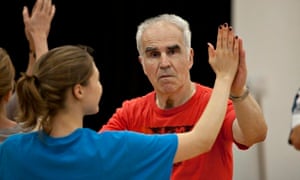
A dance class for people with Parkinson’s disease is held at the National Ballet School — part of a program that aims to show the value of arts as therapeutic tools. (COLE BURSTON FOR THE TORONTO STAR)
It’s the most graceful pirouette Rachel Bar ever performed.
When her prima ballerina dreams began to fade eight years ago, she spun her talents onto a more elevated stage.
“I just felt like there was more to me … more to say,” she recalls. “And I didn’t think I was going to be able to say that through my performing.”
Bar now offers dance therapy to people with Parkinson’s disease in the GTA.
Bar, 31, who danced for six years with major British and Israeli companies, is coupling her dance therapy instruction with a scientific study of Parkinson’s. In doing so, she has become a key partner in a three-year effort to carve out a permanent place for the arts in the province’s health system.
Led by the University Health Network’s OpenLab centre, the Art Heals Health project is bringing together disparate artists who work in medical settings and display the clinical value they add to patient care, at relatively low costs.
Ultimately the project hopes to help long-term provincial funding for the arts as therapeutic tools, says Kendra Delicaet, managing director of OpenLab, which studies and bolsters creative programs to improve the delivery and patient experience of health care.
The project, one of about a dozen the centre is running, is recruiting dancers, painters, musicians, actors and comics who are currently taking their talents into hospital and outpatient settings.
About 170 artists, therapists and clinicians from across the province and beyond attended an initial project symposium last fall. The program co-ordinated by OpenLab hasn’t yet costed out the three-year project.
The notion that art can improve medical outcomes is not new. But an increasing number of large studies support the idea, says Dr. Luis Fornazzari, a neurologist at St. Michael’s Hospital and a medical adviser to the OpenLab project.
“There are many articles that are pointing to the very good effects of art,” he says. “Heart attacks, ICU patients, patients admitted (for) bypass coronary artery diseases and other big surgeries … they respond much, much better.”
These responses, Fornazzari says, include lower use of painkillers and shortened hospital stays, cutting costs and helping the arguments for artistic interventions.
Just why art can lead to truncated, less painful recoveries and other physiological benefits is unclear, he says. But it’s likely due in part to positive effects of the neurochemicals, such as opioids and dopamine, released during participation in artistic activities.
Fornazzari’s own work has looked primarily at the protective effects that art offers the brain against the onset of dementias. Artists in particular are significantly “protected by their art,” sometimes for years, against the cognitive deteriorations caused by Alzheimer’s disease, strokes and other brain disorders, his research has shown.
Bar is completing a doctorate in clinical psychology at Ryerson University. And she has enlisted some of her dance class participants in a research project exploring the effects of dance on a Parkinson’s brain.
“We know that balance and gait and posture … do improve, and overall that dance can actually delay the progression of the disease,” she said after a recent class at Canada’s National Ballet School.
“Our research looks at … what’s unique about dance in the brain that facilitates these benefits,” added Bar, a graduate of the Jarvis St. school. (She also teaches adult and children’s programs at the facility.)
Bar and her research colleague — York University neuroscientist Joseph DeSouza — use electroencephalograms (EEGs) to search for differences in dancers’ brain waves before and after classes.
They’ve also used functional MRI scans to look at neurological changes that occur in real time during the dance.
Some 36 weeks pregnant with her second child, Bar left much of the actual instruction during the recent class to a pair of ballet school dancers, who led 18 Parkinson’s patients through a series of sitting and standing moves in one of the facility’s elegant pastel studios.
The ballet school program, with 30 registrants with Parkinson’s each term, partners with the group Dancing With Parkinson’s, which runs classes in five other locations across the city.
Bill Bartlett dances three times a week at several of them.
The gregarious, barrel-chested 71-year-old quit his career as a chef when he developed significant symptoms of the degenerative movement disorder four years ago. Like many who use art as therapy, Bartlett says ballet has drawn him out of the isolation in which illness can frequently imprison a mind.
“Many people with Parkinson’s withdraw (but this) energizes me every day,” he says. “It gives me something to look forward to, to defer depression.”
Bar, whose favourite ballets to perform were Sleeping Beauty and Swan Lake, says the use of dance in her academic work flowed naturally from her former career.
“You kind of go back to who you are and what you know.”
Bar and Fornazzari believe benefits they’ve documented — physiological, emotional, spiritual and economic — have earned the ancient arts a firm place in modern medicine.
But she notes the medical community relies on hard data to justify change. She and the other artists working in the program hope to supply just that.
Humour out of darkness
Toronto author, actor and comedian Robert Hawke is marshalling humour in the battle against cancer, after it helped him through his own bout with the disease.
▶
Toronto comedian Robert Hawke helps cancer patients out of the "4 a.m. darkness" with his "Spoonful of Laughter" workshop.
His comedy career was riding a high-speed laugh track a decade ago, having brought him frequent appearances on CBC television and radio shows and a full-time gig with the Second City comedy troupe. “I was freelancing, things were good,” he recalls. “And I was leading what I considered to be a pretty healthy life.” But then cancer sent him off the rails.
Hawke learned he had a thyroid tumour and that the master metabolism gland would have to be removed. The diagnosis and treatment proved psychological blows as much as physical ones. During weeks of fretful recovery, however, he hit upon this “funny idea” — to combat his cancer with comedy. The material he started developing and writing then would build a new calling and career.
“Once I started doing (comedy) work that addressed the cancer experience, I realized there was a real need for it,” says Hawke, now 50. That need found its source in the deep wells of fear, despair and isolation into which cancer patients often fall. Using his comic skills to make cancer patients laugh, he thought, could help haul them out of that “4 a.m.” darkness and allow them to more readily share their experiences and insights about their battles with others in similar straits.
Comedian and cancer survivor Rob Hawke, in blue striped shirt, leads an improv class of cancer patients at Gilda's Club to encourage group laughter. (CHRIS SO)
Hawke has developed several programs to address different audiences. For cancer patients themselves, his “Spoonful of Laughter” routine is a 40-minute exercise that leans heavily on teaching improv techniques in groups large and small. Another, called “NormVsCancer,” is an irreverent one-man show that OpenLab helped him bring into hospitals and other medical settings. He also created a program — Adventures in Patient-Centred Care — that teaches second-year University of Toronto medical students how to interact with more humour and humanity in the clinic.
Hawke believes that shared laughter is a key to opening cancer patients up to the camaraderie, comfort and expert advice — the “wisdom in the room” — that can be found in fellow patients. And the reactions of patients involved in one of his recent improv exercises seemed to bear him out.
“I don’t think we get enough opportunities to laugh,” said participant Nadha Hassen, 26, who is battling thyroid cancer. “It’s amazing to … be in a space with other (patients). I feel like I just took this amazing stretch.”
Hawke also published a how-to book in 2011, called Kicking Cancer’s Ass: A Light-Hearted Guide to the Fight of Your Life. It offers cancer patients strategies on dealing with doctors, setting up support groups, making healthier choices and overcoming the bouts of worry and depression the disease can bring.
Writing songs with the dying
At Toronto’s Princess Margaret Cancer Centre, SarahRose Black adds a keyboard’s lively chords to the chemotherapy’s weary drip.
“I bring my keyboard, I bring my (Tibetan) singing bowls, I bring a variety of instruments and my voice,” says Black, an accredited music therapist who has become an integral member of the hospital’s medical team.
Like psychologists or chaplains, Black, 28, sees patients based on referrals from physicians and other health professionals.
“I see people who have been first diagnosed with cancer and who are going through active treatment all the way through to end-of-life and palliative care,” she says.
“If patients are experiencing symptoms that are very distressing or have high anxiety or perhaps are experiencing existential distress, I can be referred.”
Princess Margaret is part of the University Health Network, which houses the OpenLab program.
Black says anecdotal and academic evidence has convinced her of music’s healing power, a key reason she entered her chosen field. She often works in interactive sessions with patients — pulling them into a musical participation that she and many believe has measurable therapeutic benefits.
“Sometimes patients are interested in picking up a guitar that maybe they haven’t picked up in years, or singing a meaningful song with me,” she says.
“Or if they’re well enough, (they can) hold one of my instruments, like a percussion instrument, and we improvise together.”
SarahRose Black is a music therapist, working with cancer patients at Princess Margaret Hospital. For patients too tired or sick to participate, Black will take bedside requests. (TARA SCHORR)
For those patients too tired or sick to participate, Black will take bedside requests, playing tunes that resonate with the patient.
“But often they say, ‘Whatever. Just play whatever,’” she says.
“So I end up doing something … improvisational.”
Black also works with the dying — patients transferred to Princess Margaret’s 10-bed Kensington Hospice who might wish to leave a musical legacy of their lives.
“Many, many times I’ve been in with people who know they’re dying … and in the course of one or two (visits) we write a song together,” she says.
“I put it on a CD and the patient can give it to their loved ones as a gift.”
These songs are often played at funerals, says Black.
In all these circumstances, Black says, her live sessions have an interactive advantage over recorded music — allowing her to tune a performance to a patient’s mood, strength and desires.
“If I can connect with someone and meet them where they’re at and cater the music to their unique experience, the therapeutic potential is enormous.”
Black’s Princess Margaret gig began three years ago as a student internship. She now holds a permanent position at the hospital, which she’s using to help her complete a U of T doctorate in music and health.
“People tell me that the experience of listening to music in their hospital room humanizes their care,” she says. “Suddenly they’re not just a patient but they are a human being with complex needs.”
Black says research shows this humanizing effect of music produces consistent clinical benefits, helping with pain and symptom management of drugs, radiation and surgery.
In a cancer hospital, however, music may frequently be the final therapy.
“I often get called in when there are no words left. It’s just music, and silence.”
Measuring art’s healing power
The Lancet, August 2015
This retrospective study of some 4,200 previous research papers showed music played in post-operative settings provided patients with significant reductions in pain, anxiety and use of analgesics, and increased satisfaction with their hospital stays.
Canadian Journal of Neurological Sciences, August 2013
This study was based on internationally acclaimed sculptor Mary Hecht, who taught at York University. Though she had profound dementia in her last years, Hecht could still draw accurate images of people and objects around her. This suggested that art could bestow protection for the brain.
Pediatrics, May 2013
Researchers looked at 272 premature babies who had lullabies and heartbeat and womb sounds sung or played to them by parents and registered music therapists, while in neonatal intensive care units. It found that the songs and sounds could slow the baby’s heart rates, make them more alert and improve their sucking.
Dancing improves mobility and quality of life in people with Parkinson’s
* Study based on original Brooklyn Dance for PD® program
* Participants experienced significant improvement in overall movement, particularly walking
* Participants reported feeling better and empowered
* Results published in Journal of Neural Transmission
Dancing may help people with Parkinson’s disease (PD) improve their ability to walk and may enhance their quality of life, according to research just published in the Journal of Neural Transmission.
Researchers studied the benefits of Dance for PD® classes in patients with idiopathic Parkinson’s disease.
“The combined physical and psychological benefits participants experienced,” said lead author Olie Westheimer, executive director of the Brooklyn Parkinson Group, “suggest that through exercise, camaraderie and the simple joy of movement, dance classes are an effective way of ending the isolation and inactivity that too often define living with PD.”
Lead author Olie Westheimer
Based on a standardized measurement of overall mobility (the Unified Parkinson’s Disease Rating Scale III), participants after 8 weeks and 16 sessions showed:
• A 10.4 percent improvement from baseline in overall movement(statistically significant); • A 26.7 percent improvement from baseline in walking, or gait (statistically significant); and • An 18.5 percent improvement from baseline in tremor.
Researchers noted, in particular, the importance of improved walking. Other studies have shown that patients with impaired gait are more prone to falls and consequently more anxious.
David Leventhal
“We’ve known anecdotally and through observation that people in our dance classes move with more confidence, grace, and fluidity as a result of the dance-based activities we do in class,” said David Leventhal, Dance for PD® Program Director and one of the program’s founding teachers. “To see that improvement represented in this data is a very promising indication that the aesthetic and physical strategies dancers use to move are immensely beneficial—even essential—to those living with Parkinson’s.”
Participants also reported improved quality of life in post-class interviews that asked such questions as: What did you get out of class? How has class impacted your quality of life? Has anything changed in you because of class?
Participants reported “feeling better,” experiencing a “sense of companionship,” finding that “general health has improved,” and feeling “less helpless.”
The quality of life changes were reported across the spectrum of disease, from barely noticeable to severely disabled (on Hoehn and Yahr 1-4 scale).
Researchers also measured results with other standardized scales, including the Berg Balance Scale, the Beck Depression Inventory and the Parkinson’s Disease Questionnaire-39 (PDQ-39), a widely used survey of quality of life. Changes measured by these tools were not statistically significant. However, some participants did report in the PDQ-39 that their ability to cut up food and speak had improved and that they were less likely to feel unpleasant hot or cold sensations.
Manny Torrijos (photo: Eddie Marritz)
“Parkinson’s affects one’s movements, emotions, and cognition” says Manny Torrijos, who joined the study class soon after he was diagnosed. “Dance does wonders to promote controlled grace with one’s body, lift one’s spirits, and fire new neurons, thereby rendering it the next best thing to finding the cure.”
Dr. Un Jung Kang
Westheimer and her colleagues believe larger studies in which participants are randomized into intervention and control groups are necessary to confirm these results. They would also like to compare Dance for PD® with a general fitness intervention for Parkinson’s patients, as would Dr. Un Jung Kang, MD, Chief of Movement Disorders in the Division of Neurology at Columbia University Medical Center.
Kang commented: “Dance involves multiple facets such as physical training, emotional reward of participation, and social interactions, all of which should be beneficial in PD. Findings such as this study beg for randomized control study to demonstrate objective benefit of the intervention and to compare the effect of their unique program to other fitness programs not only in motor outcomes, but also patients’ ability to engage in the program consistently over long term and other non-motor features of PD.”
Co-authors are Olie Westheimer, MA; Cynthia McRae, PhD; Claire Henchcliffe, MD, DPhil; Arman Fesharaki, MD; Sofya Glazman, MD; Heather Ene, MD; and Ivan Bodis-Wollner, MD, DSc.
Click on the button below to access the full article, which is available free of charge from October 23rd through December 23rd, 2015.
This study adds to the body of research being done around the world to investigate the effects of dance and dance classes on people with Parkinson's, with on-going projects at Roehampton University/English National Ballet (Sara Houston and Ashley McGill), York University/Dancing With Parkinson's/Canada's National Ballet School (Joseph DeSouza), McMaster University/Hamilton City Ballet (Matthew Woolhouse), and University of Florida (Jill Sonke and Michael Okun) among others.
In an exciting related development, Sara Houston and Ashley McGill, with colleagues from English National Ballet (ENB), will hold a day-long symposium this Tuesday, October 27 to announce findings from the latest phase of their ground-breaking research, providing the first longitudinal piece of evidence on the impact of the ENB program over the past three years. Click here for details.
Dance for PD® is a Registered Trademark of Mark Morris Dance Group and Brooklyn Parkinson Group.
see also some of our past live stream discussion at NBS, NY and Houston.
I really like the person's description below: "Joyce Plaice has been attending lessons in Plymouth for the past two years: “Dancing is the opposite of life with Parkinson’s, which I find is a slow, depressing slog – like walking through treacle. The tight muscles remind me of new knicker elastic with little give. But when I hear the music, the muscle tension eases and my mood lifts. I am doing what normal people do: socialising, making physical contact, using my brain to learn new steps. And my body gets a healthy boost with a much wider range of movements than it would get during the course of my day.”"
Another quote from the article which has impact "Only 1% of people with Parkinson’s in the UK live within reach of a dance practitioner specifically trained to work with them"
Dancing proves a good move for people with Parkinson’s disease
Staying active is crucial for those with this neurological condition and dancing has been shown to lessen tremors and improve flexibility, as well as lifting mood
Moving not shaking: people with Parkinson’s benefit from dance sessions. Photograph: Rachel Cherry
Alison Underwood, who is in her 60s, was diagnosed with Parkinson’s 10 years ago and now runs a support group in the Llandudno area in Wales for others with the condition. “I set up a monthly dance group, that many of us find physically helpful and enjoyable,” she explains. “We do a lot of ‘free’, expressive dancing, and there is considerable emphasis on the fact that it doesn’t matter if you’re sitting or standing. The positive effect that dancing has on us is quite magical.”
Only 1% of people with Parkinson’s in the UK live within reach of a dance practitioner specifically trained to work with them. It was this statistic that inspired People Dancing, a community dance organisation, to join the US-basedDance for Parkinson’s group in putting together an online training programme to help dance teachers better meet their needs.
The online programme enables dance teachers to learn more about the condition, and helps them to adapt their lessons to make them more appropriate – and beneficial – for those with Parkinson’s. Anna Leatherdale, producer at People Dancing, is a dance practitioner and a member of the Dance for Parkinson’s Network UK. “The more that people with Parkinson’s can engage with dancing, the more benefits they’ll feel,” she explains. “So if an hour’s dancing means an hour’s benefit, and you’re only able to get to a dance group once a month because there are so few teachers, that means you’ll only be feeling an hour’s benefit a month. It’s not much.”
Dance teachers have been working with people with Parkinson’s for more than a decade in the US, thanks to pioneering work at the Brooklyn Parkinson Group and Mark Morris Dance Group in New York. “However, interest has been growing in the UK in the past few years, and we’re now seeing more of a demand for dance classes of this type,” says Leatherdale.
Advertisement
The Dance for Parkinson’s Network UK supports experienced teachers in providing classes – including freelance dance and music artists, as well as artists from English National Ballet and Pavilion Dance South West. Teachers work in a range of dance styles, often teaming up with local support groups.
Underwood was inspired to set up her own group after attending a conference at which Dr Peter Lovatt, a dance psychologist also known as “Dr Dance”, explained how dancing benefits people with Parkinson’s. “We all seem to move more fluently, without bumping into others, which is difficult to do when you have Parkinson’s,” says Underwood.
She continues: “The opportunity for intentional physical contact in dance is important, too. We often work closely with a partner. When you have Parkinson’s, you can withdraw emotionally – I suppose you don’t feel as comfortable in your own body any more. Physically touching each other, while dancing, helps us to overcome inhibitions and to relax. This is useful because stress and tension exacerbate symptoms dramatically. Dancing leaves us all smiling, and we return home re-energised and ready to deal with the realities of life with Parkinson’s.”
Because the social element is so beneficial, the online training programme emphasises the importance of working with friends and carers, as well as with people with Parkinson’s. According to Parkinson’s UK: “Some people find gentle exercise, including dance, can help them to move with greater ease and gain some relief from symptoms, as well as improving mood. The social benefits of being active and doing something enjoyable with others can be just as important.”
Leatherdale has seen these benefits first hand. “By giving people with Parkinson’s an opportunity to dance, you give them confidence in their own bodies again. I’ve met people who have thought: ‘I’ve got a movement disorder – I can’t move any more.’ But by concentrating on a clear beat, rather than the physical act of moving, shuffling can, temporarily, turn back to walking. Then people can take what they’ve experienced into their day-to-day lives, for example by wearing headphones and listening to music with a beat while they’re out shopping.”
Imagery used in dancing can really help too. “Instead of saying to someone, put your arms out and move them around in a circle, we might say, pretend your hands are tracing ripples on water,” says Leatherdale. “By focusing on the image rather than the action, it becomes a lot easier. With Parkinson’s, you can lose a lot of facial expressions, but one of the best things is seeing the joy that emerges when people with Parkinson’s rediscover the delight that dancing with other people can bring.”
Joyce Plaice has been attending lessons in Plymouth for the past two years: “Dancing is the opposite of life with Parkinson’s, which I find is a slow, depressing slog – like walking through treacle. The tight muscles remind me of new knicker elastic with little give. But when I hear the music, the muscle tension eases and my mood lifts. I am doing what normal people do: socialising, making physical contact, using my brain to learn new steps. And my body gets a healthy boost with a much wider range of movements than it would get during the course of my day.”


 The mouse moves through the virtual world of a video game with the help of a Styrofoam ball that floats on compressed air.THOMAS HAINMÜLLER, MARLENE BARTOSResearchers looked into the brains of live mice experiencing a virtual environment to see how neurons were altered through the process of memory consolidation, according to research published June 6 in Nature.
  A look into memory: A video recording shows neurons begin to flash as soon as they are activated.THOMAS HAINMÜLLER, MARLENE BARTOS