Showing posts with label dementia. Show all posts

Monday, June 13, 2022

3 ways to boost your memory, according to brain experts

 reposted from CBC radio - thanks Karolina for this one!

3 ways to boost your memory, according to brain experts

From exercise to word games with others, these activities reduce your chances of dementia

A couple dances during the festivities of San Cayetano, the patron saint of labour and bread, in Madrid, Spain, last August. Activities like dance, which combine exercise, socializing and cognition, benefit our brains, a psychologist says. (Andrea Comas/The Associated Press)

Worries about dementia often rank high in polls of Canadians' health concerns, but a neurologist says there are ways to keep our cherished memories strong.

Dr. Sandra Black, a cognitive neurologist at Sunnybrook Health Sciences Centre in Toronto, says with normal aging, short-term memory dulls and the brain's processing speed slows with each decade after 50.

To help counter those declines, Black looks for ways to boost memory that are supported by scientific evidence.

1. Get moving

Exercise, from walking to running, is one memory booster that's backed by more and more research. Canada's guidelines recommend at least 150 minutes of moderate to vigorous physical activity per week for adults.

"When you are aerobically exercising, when you're on that run, your muscles are actually releasing a signal. It's called irisin," Black said. "You're actually stimulating the part of the brain that stores information and learns things."

The recent discovery of the irisin protein builds on other research linking muscle and brain function, Black told Dr. Brian Goldman, host of  CBC's podcast The Dose

Dr. Sandra Black encourages walking and more heart-pumping physical activity as beneficial for mental abilities like memory and language. (Submitted by Sandra Black)

When she sees patients, Black said she talks about why lifestyle choices such as exercise are important. Since a healthy brain needs a lot of oxygen, whatever protects our blood vessels, heart and circulation, also fuels the brain.

Black and other experts encourage walking, or more heart-pumping physical activities, for their benefits to cognitive abilities like memory and language.

2. Eat the good stuff

Black suggests eating a Mediterranean diet rich in green, leafy vegetables like broccoli, kale and cabbage, as well as berries, whole grains, walnuts and fatty fish such as salmon, mackerel and tuna rich in omega-3 fatty acids.

The advice is based on studies that followed people in different populations that seemed to have a lower prevalence of Alzheimer's and vascular disease, compared with populations following other eating patterns.

What else works? In one published clinical trial, researchers showed that medium-chain triglycerides found primarily in coconut oil may help delay worsening Alzheimer's disease compared with taking a sugar pill, the gold standard regulators use to approve medications.

Your best bet is to consume healthy nutrients through a varied diet of mostly whole foods, not supplements that promise those benefits in pill form.

Black said patients who can take supplements aren't told to stop if they can afford them, but her team doesn't endorse them, either. That's because the scientific evidence in favour of many supplements fails to take the placebo effect into account, or the trials weren't long enough to measure an effect, she said.

WATCH | More praise for Mediterranean diet:

More praise for Mediterranean diet

4 years ago
Duration2:26

3. Enjoy word games with others

Penny Pexman, a psychology professor at the University of Calgary who studies cognitive neuroscience, suggests activities that combine exercise, socializing and cognition.

Pexman's lab focuses on how we process language, including a study titled This is your brain on Scrabble

Scrabble players who enjoy the game and its social benefits are motivated to score higher, Pexman said. 

Aside from the social benefits of getting together to play, Pexman's research suggests competitive Scrabble players also recognize words faster than those who didn't routinely put down tiles, particularly for words presented vertically.

"My best recommendation, based on what I know, is to engage in things like dance or pickleball," Pexman said. "You've got things that involve some spatial skills, they're taxing your working memory and they're also giving you social …benefits, too." 

Pickleball is a workout for both spatial skills and working memory that also offers social benefits. (Brian Blanco/The Associated Press Images for Humana)

Why it's not all downhill

Pexman also studies age-related changes, and notes that many, but not all, cognitive abilities start to decline by about age 30. 

"There are things, though, that you can continue to grow," Pexman said. "Your vocabulary grows throughout your life."

Black also points to the wisdom and knowledge we gain with age.

"You have a little more trouble with the word finding, but you know a lot more about the world," Black said. 

A 25-year-old may be faster, but a wise elder in many societies has a richer understanding of culture from their life experience, she added.

ABOUT THE AUTHOR

Amina Zafar

Journalist

Amina Zafar covers medical sciences and health topics, including COVID-19 and other infectious diseases, for CBC News. She holds an undergraduate degree in environmental science and a master's in journalism.

Thursday, December 10, 2020

Dementia Care Mapping: Care home managers and staff need more support to improve care

 reposted from

https://evidence.nihr.ac.uk/alert/dementia-care-mapping-dcm-more-support-care-home-managers/?source=chainmail

Alert

Dementia Care Mapping: Care home managers and staff need more support to improve care

Many care homes are struggling to implement a tool designed to help them better meet the needs of people with dementia. New research suggests that care home managers need to be supported, trained and engaged when such tools are introduced into care homes.

The tool, called Dementia Care Mapping (DCM), aims to improve practices in care homes for people living with dementia. The programme asks staff to put themselves in the place of residents, through watching and assessing residents’ experiences. The observations are fed back to the staff team who work together to develop action plans to improve care.

A previous study found that DCM did not lead to improvements in homes. This study explored why. It found that implementation is patchy and vulnerable to issues such as staff and manager turnover, their confidence or skills to lead changes in practice, and inadequate staffing and funds.

The researchers suggest that how well managers understand, value and engage with DCM has a key influence, as does their leadership style.

What’s the issue?

Many people with dementia, particularly those with more complex needs, live in care homes. Care homes often use DCM to improve the quality of care offered to residents with dementia.

To implement DCM, two members of care home staff (the ‘mappers’) are trained to use the tool. They brief other staff about the tool and then sit in the lounge or other public areas to see what daily life is like for residents. They note what residents are doing, how they are feeling and the actions that make residents happy or cause them distress. After coding and analysing their observations, the mappers write a report and feed this back to the team. Improvements are suggested by the staff team, put in place, and the cycle is repeated a few months later.

Earlier studies outside of the UK found that DCM had mixed results across care homes. Where DCM was led by the researchers, there were some benefits for residents and staff. However, where DCM was led by care home staff, no benefits were found and there were problems implementing the tool.

The current study was part of a UK trial which asked trained staff in 31 care homes to complete three cycles of DCM. The first was supported by an external expert provided by the research team. Compared to 19 homes not using DCM, this trial found no benefits in terms of reduced resident agitation, neuropsychiatric symptoms such as depression, use of anti-psychotic drugs, use of healthcare resources or improvements in quality of life. Implementation of DCM was variable.

What’s new?

This study explored the barriers and facilitators in introducing a complex tool like DCM, including the influence of care home managers. It looked at the actions and attitudes of managers themselves, but also the circumstances that enabled managers to support DCM.

Researchers interviewed 48 care home staff (managers and staff trained to use DCM) who were implementing DCM at a range of different-sized care homes in different locations across England. They found that managers played many crucial roles in supporting implementation.

Analysis of the programme identified five themes:

  • Managers' support for the intervention was essential. One DCM expert provided by the research team to support implementation of DCM said about a care home that only carried out one cycle: “She [the manager] never attended anything. She never supported, as far as I could see, the mapper.”
  • Managers’ understanding of DCM and its potential benefits was variable. Responses ranged from: “It’s a brilliant tool, and just gives you the time to look and focus on what is going on in your home” to: “I didn’t realise how long things would take and how much effort it would take.”
  • The choice of staff trained to lead DCM influenced the outcome. One DCM expert said: “Some managers were really clear [on their choice of mappers]. ‘Yep, those two are good communicators, good agents of change, they’ll be good to lead this.’ For other managers it was completely random.”
  • Management stability was a challenge with a change of manager in two in five care homes during the 16-month study period. These changes often undermined implementation: “The study was interrupted, the staff that were doing the mapping… left the company, so when I already arrive here [as a new manager], they were not here and I never had any contact with the mapping,” said a manager of a care home that did not complete any DCM cycles.
  • Managers' engagement and leadership depended on how well they valued DCM. In homes with higher levels of implementation, managers had the influence to involve the whole team. One expert said, ‘They had plenty of un-rostered time… so they could prioritise it.”

Why is this important?

The study suggests ways to tackle the difficulties in improving care in care homes.

Implementing tools such as DCM in care homes can be challenging and it relies on the support of managers. Management style is rarely studied in the social care sector, yet this study found that managers in homes that had most success with DCM played many crucial supportive roles.

For example, some protected staff time to implement DCM, assisted less confident staff, and engaged staff across the home in DCM and the associated changes in practice.

Managers’ leadership skills and understanding of DCM affected their ability to provide the necessary support. A change in manager often undermined implementation and the researchers suggest it may not be feasible for care homes to introduce such interventions when there is managerial instability.

The findings suggest that managers and staff may require greater support to implement interventions such as DCM. Greater, ongoing support from external experts may also help.

What’s next?

The findings should have direct impact on the delivery of DCM in care homes: they showed that managers need better support, such as a clear understanding of what DCM involves, and extra funds to pay for dedicated staff time. DCM was more likely to be successfully implemented with support from researchers or external experts. They said this was needed on an ongoing basis, not just during the first cycle.

These findings have implications for research on other interventions in care homes.  Managers need to be actively engaged from the outset of a research study. The high turnover of managers means intervention research should include strategies to engage and support new managers, and to ensure ongoing engagement from existing senior staff.

You may be interested to read

The full study: Kelley R, and others. The influence of care home managers on the implementation of a complex intervention: findings from the process evaluation of a randomised controlled trial of dementia care mappingBMC Geriatrics. 2020;20:303

The wider trial findings: Surr C, and others. Effectiveness of Dementia Care Mapping™ to reduce agitation in care home residents with dementia: an open-cohort cluster randomised controlled trialAging & Mental Health. doi: 10.1080/13607863.2020.1745144

An infographic showing the results of the wider DCM trial

A summary of DCM implementation: Griffiths A, and others. Barriers and facilitators to implementing dementia care mapping in care homes: results from the DCM™ EPIC trial process evaluationBMC Geriatrics. 2019;19

The role of external experts: Surr CA, and others. Exploring the role of external experts in supporting staff to implement psychosocial interventions in care home settings: results from the process evaluation of a randomized controlled trialBMC Health Services Research. 2019;19:790

How well DCM was implemented in the trial: Surr C, and others. The Implementation of Dementia Care Mapping in a Randomized Controlled Trial in Long-Term Care: Results of a Process EvaluationAmerican Journal of Alzheimer’s Disease & Other Dementias. 2019;34:390-398

Funding

This research was supported by the NIHR Health Technology Assessment Programme.

Sunday, November 24, 2019

Arts play major role in health and well-being, WHO says in new report

reposted from
https://www.euronews.com/2019/11/11/arts-play-major-role-in-health-and-well-being-who-says-in-new-report


Arts play major role in health and well-being, WHO says in new report

 COMMENTS
Arts play major role in health and well-being, WHO says in new report
Copyright
ionasnicolae/ Pixabay
TEXT SIZEAaAa
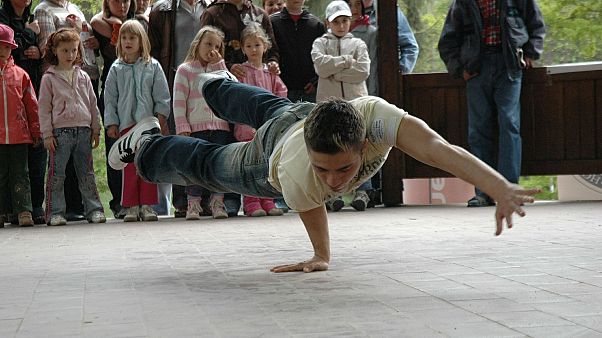
Can we dance our way to better health and well-being? The answer is yes, according to a new study released this Monday by the UN's health body.
“Engaging with the arts can be beneficial for both mental and physical health,” the World Health Organisation (WHO) concluded after conducting “the most comprehensive review of evidence” on the subject to date.
The organisation's Regional office for Europe analysed over 900 global publications and 3,000 studies, with a view to informing public policies.
According to health experts, listening to music helps control blood glucose level, playing an instrument improves the immune system and stress management, while dancing provides benefits throughout the body and mind. Meanwhile, painting or sculpture can help tackle depression.
“The examples cited in this groundbreaking WHO report show ways in which the arts can tackle ‘wicked’ or complex health challenges such as diabetes, obesity and mental ill-health,” said Piroska Östlin, WHO Regional Director for Europe.
The publication will be launched this Monday 08:00 CET during an event in Helsinki, Finland. You can watch the launch event by clicking on the player below.
The report highlights how the arts play a crucial role in well-being from birth to end of life.
“Young children whose parents read to them before bed have longer night-time sleep and improved concentration at school,” WHO said.
Research also shows the benefits of theatre for adolescents or music for older people with dementia.
Arts can furthermore be a valuable resource in emergency situations and organisations such as Clowns Without Borders have developed expertise in this area.
The report says art therapy does not only produce good results but can also be more cost-efficient than standard biomedical treatments.
Arts intervention can furthermore be tailored to have relevance for people from different cultural backgrounds, WHO notes, thus offering “a route to engage minority or hard-to-reach groups.“

Case studies across Europe

The report provides various examples of organisations implementing arts-based approaches to health.
One of them is Arts on Prescription in the UK. Under the scheme, individuals who consult their GP with non-medical problems - such as social isolation - can be referred to a link worker.
“Link workers connect patients with community activities, including participatory arts activities. Local evaluations in different regions have shown benefits for mental health, chronic pain, management of complex and long-term conditions, social support and well-being,” the report found.
In Russia, Doctor Clown has been working in the past decade to improve the experiences of children in orphanages, hospices and hospitals.
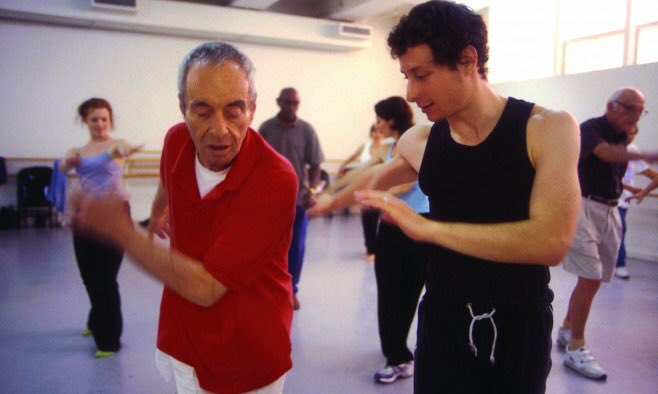
Dance for PD offers an example of a Europe-wide network that designs dance classes for people with Parkinson, focusing on their specific symptoms such as balance, cognition, motor skill, mental health and physical confidence.

Policy implications

In light of the report's findings, WHO calls on governments and authorities to implement policies giving a greater role to arts in public health.
Key policy recommendations include, among others:
• ensuring that communities have access to arts-for-health programmes
• integrating arts into the training of health-care professionals;
• introducing or strengthening referral mechanisms from health professionals to arts programmes